Blog Page
Explore expert tips, training insights, and helpful stories designed to support you and your dog at every stage of learning. From behavior guidance to practical training advice, our blog helps you build confidence, improve communication, and strengthen the bond with your dog.
All publications (662)

This game takes advantage of a simple pattern. The basic setup involves you sitting on the ground with two treat dishes on both sides of your knees. There is a cone in front of you. The initial objective is to shape your dog to go around that cone from one side to the other. As they round the cone and approach the treat bowl on that side, place a cookie into it. The dog should eat the cookie as soon as they arrive and smoothly turn around to go around the cone to your other side, where they will collect a cookie from that bowl.
Thus you end up with a basic pattern - the dog goes from one treat bowl to the other by going around the cone in front of you. As the dog is successful, increase the amount of space between you and the cone. Now the dog must actively move away from you, interact with the obstacle, and return to your other side to collect their reward.
This is a shaping game, so the amount of handler help should be minimal - if your dog is struggling, changing your setup (I.e. moving the cone closer) is preferable. There is no verbal marker in this game, and the distance your hand travels to place the next cookie in the right bowl should be minimal.
Common Issues
The most common issue that comes up is cutting across the middle line instead of going around the cone, for example going around from left to right and cutting across from right to left. If this is not rewarded, the dog tends to then go around the cone from the side that they are now on (from left to right in our example). That gets rewarded, and many times that's all you needed to get the dog back on track.
Some dogs, however, try to continue the new pattern - cut across the middle in one direction and go around the cone in the other for their one cookie. This is not a pattern you want developing - it is crucial that the dog alternates direction with every rep. You can wait them out until they offer going around the cone in the direction they keep trying to skip, or you can make the set up easier and move the cone closer to you (half the distance).
If your dog lies down, or otherwise offers a stationary behavior, throw a reset cookie towards the line they should be traveling - when they get there and see the cone, they are likely to remember what they were doing and offer going around it again.
This is a fairly mentally intensive game, so watch your session lengths. Some dogs thrive on patterns and will go around that cone a hundred times. Other dogs will start to make deliberate mistakes when asked to do the same thing too many times in a row - ending the session or doing a different drill is better there to avoid building frustration.
Adding Variation
Once the dog understands the pattern and that they are not to cut across the middle line between you and the obstacle, you can increase the complexity of the thing they are doing in the middle. The simplest progression involves putting a jump right behind the cone - such that you are perpendicular to it. The dog then goes out, jumps a tight wrap before coming back to your other side to collect their treat. Since they are going back and forth, they are working both directions evenly.
From here your options open up. Two jumps on either side of the cone - progress to moving them further apart as the dog is successful to make two separate lines with a turn at the end. Add a tunnel to the picture - the dog will now take one jump, continue on their line to take the curved tunnel, come out from the other side to take that jump before coming back to you.
Expand that further - set up a jump grid, an element that allows your dog to turn (tunnel or cone or jump), then another jump grid on the other side. Set up weaves - or even just a single 2x2 to practice the entry. Making use of this pattern allows you to maximize the efficiency of your training.
By taking handler motion and start line stays out of the picture and using the pattern to give your dog confidence in where to go next, you allow them to concentrate on their job of obstacle execution. By applying the pattern to longer chains of obstacles, you let your dog develop confidence in working at a distance from you. The one-obstacle variants are great for a small space, while the space-requiring grids and sequences give your dog a workout with minimal effort on your part. The back and forth nature of the pattern equalizes the number of reps done with turning in each direction, keeping your dog's muscle development balanced.
Naturally, this game must be balanced out by other drills and games that practice handler focus and prioritize speed. Unless you have a dog who naturally likes moving quickly, their speed of execution in this game is likely to be leisurely - especially in the initial stages of learning the pattern and how it applies to variations. This is a game to add to your arsenal of tools to keep your agility partner balanced between obstacle and handler focus.
We talk about the theme from camp this year and unveil an exciting new program, coming soon to FDSA!
Want the full details on the FDSA Pet Professionals Program? Check out the new website, www.fdsapetprofessionals.com!
Hands up — who has trouble teaching the concept of duration to their dogs?
Maybe all your other dogs have just gotten it, but now you have one who, well, just doesn't. It can be tricky, especially with sensitive dogs who tend to shut down at the mere hint of a 'missed click.' You know the ones; they can offer you a nose touch multiple times, but each is so fast you struggle to time your marker to when the dog is actually touching your target. And if you are able to time that click just right, heaven help you if you delay it for a split second – your dog will interpret that as a 'mistake' and will be too traumatized to train again for a week.
Or the hyper motivated ones: they can respond to your down cue super-fast, but they appear to have rubber elbows – as soon as they touch the ground they bounce back up again! Sure, you can get the illusion of duration easily enough by feeding frantically in position, but as soon as the food slows down – boing! Dog is standing again!
Both of these types of dogs, the super sensitive and the super motivated, can be frustrating to train.
However, a year or so ago I fell over a neat little trick to help with both types of dog. I'm sure that it's not new (few things are!), and I doubt that it will be life changing for many of you, but if you are struggling to teach duration, it may be the key you've been looking for: I now teach duration behaviors using a focus point.
What skills does it take to compete in nosework other than identifying odor? Whether looking to start a puppy or build confidence in an older dog, there are skills your dog needs beyond finding odor... and Stacy and I talk about exactly that in this episode.
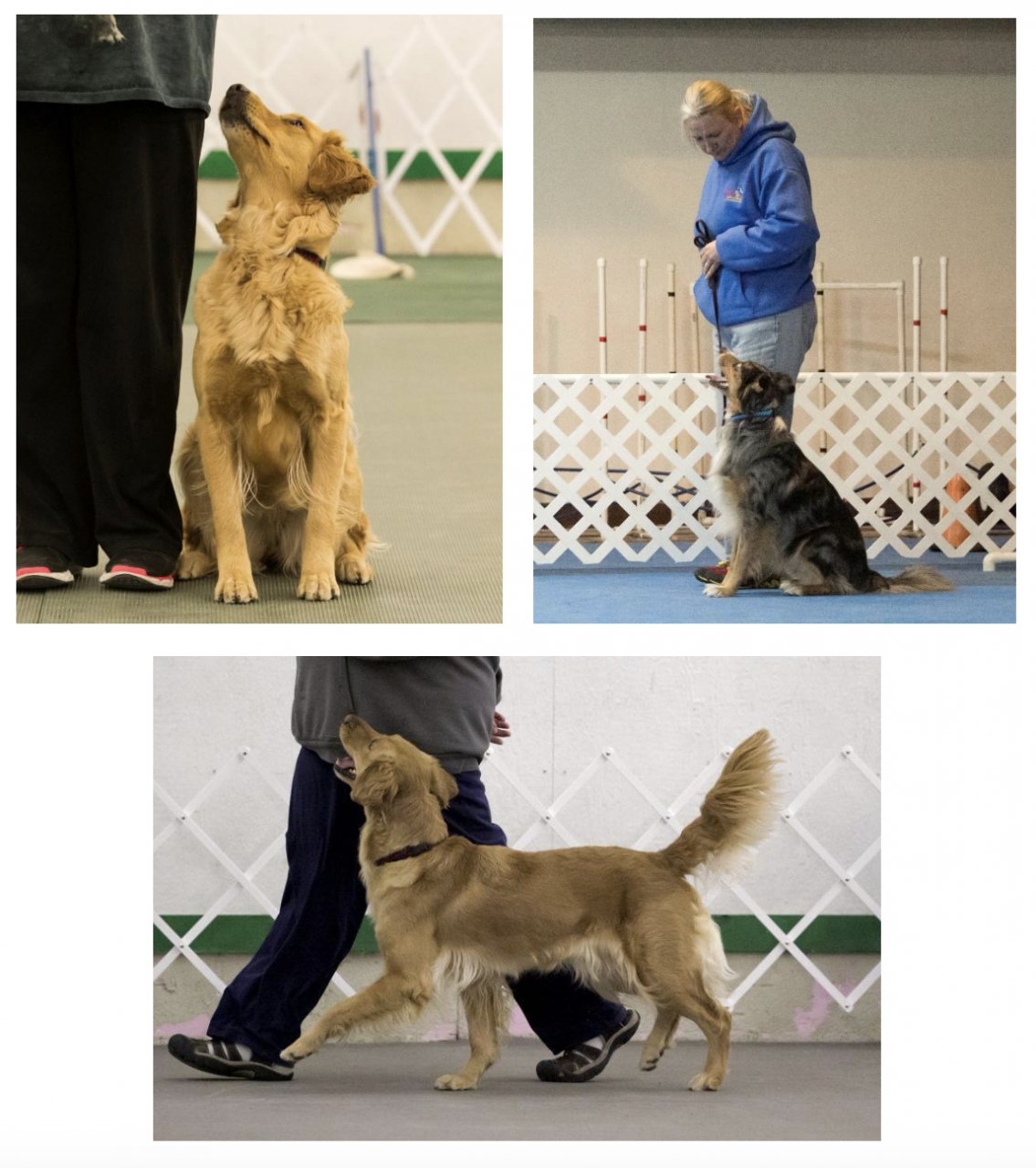

Are you looking for a nice gentle way to get in the competition ring? Or maybe you want to do some obedience, but would like to get your feet wet before jumping right in. Perhaps you've been playing around in TEAM and are ready to see what you can do with your newly learned skills. Do you have an older dog that wants to keep doing stuff, but maybe obedience is too much?
Rally can be the perfect answer for you!
Ever wish your dog didn't pull in excitement when they see people or other dogs on a walk? Nancy and I talk about teaching skills to get nicer greetings when your dog wants to say hi.
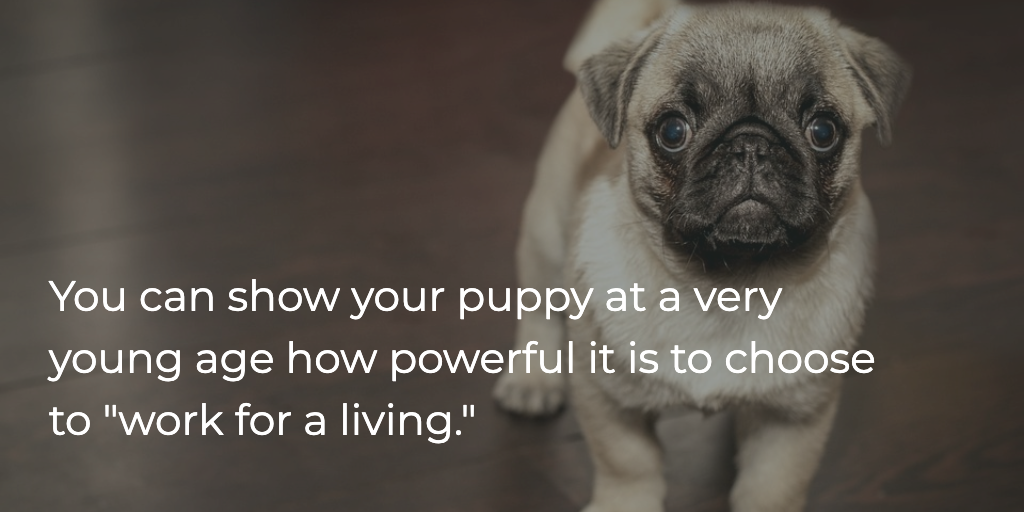
That bit about the cookie being.....right.....there! Why on earth would your puppy give you direct eye contact when he could be looking at the cookie?
This game teaches your puppy to look at your face instead of the cookie. The concept that working on the cookie directly will not make it become available is a difficult one! But really, teaching this concept is only a matter of well-timed clicking and treating.
You can show your puppy at a very young age how powerful it is to choose to "work for a living." Your puppy will learn here that offering behaviors that earn the click is how to make that cookie right there become available.
Sarah Stremming and I talk about training to get through the teenage years — what it takes to get through them and how to create the foundation for a well-balanced adult dog.
Big events are wonderful.
Big events are scary.
Big events in our dog training/ sports world can be a trial, show, championships, nationals, seminar, camp or any time a major outcome goal is on the line.
We often talk about taking care of our dogs through the process: making sure they have the skills to function in that environment; bringing lots of treats; focusing on what they are doing right; setting up their crate area in a good place for them; balancing time out in the atmosphere with time to nap and rest; stopping and assessing where they are at and determining next steps. All these things sound great on paper — and they are!
But if you aren't taking care of yourself, they become moot points. You won't perform at the best level possible unless you are both on your A game.
Events like this feel scary because they matter. They are important to you, and that's why you care. And caring is good right? So, what can we do to take care of ourselves at these events? We need to plan ahead for OUR needs.
Kamal Fernandez recently published his book, Pathway to Positivity! He joins me on the podcast to chat about the book and talk about how important it is to teach sports dogs how to be great pets too.
Let's talk about jumping up on people.
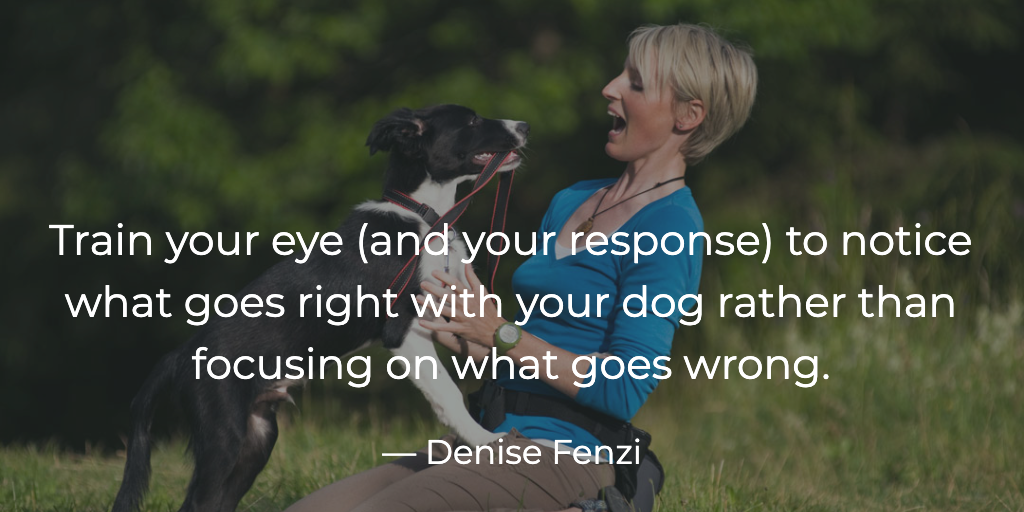
First, let's consider the dog's point of view. If your dog does manage to keep four feet on the floor, they might not be noticed! They cannot express their excitement at your presence! In contrast, if they jump on you, they will get noticed, whether you appreciate that or not. Sometimes any attention is better than no attention at all, so let this be a generic piece of advice: train your eye (and your response) to notice what goes right with your dog rather than focusing on what goes wrong.
Today Dr. Debbie Gross Torraca joins me to talk about owning, training, and competing in sports with long-backed dogs — including some breeds that you may not consider as being long-backed breeds!
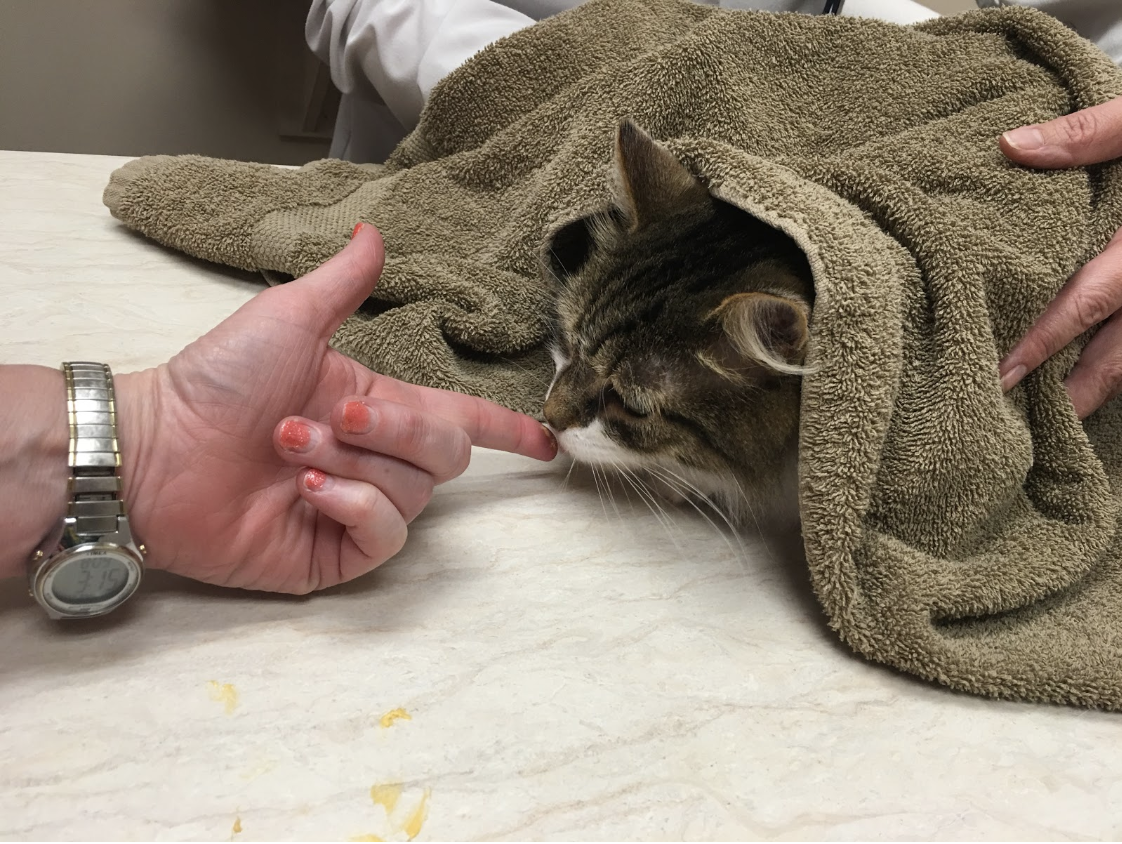
Last year my cat, Tricky, had a very serious injury to his tail. So serious that amputation was considered an option. The injury required an immediate trip to the emergency vet clinic. I had to wrap an injured and bleeding Tricky in a towel, place him in his travel crate, drive him there, and hand him over to strangers. All while he was in quite a bit of pain. Tricky stayed at the emergency vet being evaluated and receiving treatment for about five hours. He had an x-ray, his wound examined, evaluated, treated, and wrapped, and he received injections of pain medication and antibiotics. He came home wearing a cone.
Petra Ford joins me to talk about competition obedience — how she creates a plan for the ring and what it was like to win the obedience world cup.
Yes, this is something I actually heard a trainer say at a workshop I was giving overseas.
In fact, having the unique opportunity to travel the world, giving talks about working with and modifying aggressive behaviors in dogs, I've been privy to some really interesting viewpoints when it comes to dog training.
"Spitting in your dog's food to claim ownership" is another one that ranks up there in the bizarre — and appetite spoiling — category.
While it would seem obvious that urinating on a dog will not fix a resource guarding issue, there are still a plethora of erroneous recommendations being doled out as gospel online and by well-meaning dog enthusiasts.
Some of these include:
- Reaching into a dog's food bowl while they are eating so they "get used to it"
- Taking their food bowl away while they are eating so "they know you own it"
- Petting the dog while they are eating so they "get used to it"
This "advice" actually creates a lot of business for dog trainers and behavior consultants who work with resource guarding in dogs. A fair amount of my cases involving dogs who guard food bowls or other ingestible items have a history of being exposed to these annoying human attempts of well-intentioned, but ultimately doomed, proactivity.
Now, there are some dogs who habituate to these interruptions during what should be a peaceful meal time — but why risk it?
Helene and I chat about her upcoming webinar on intact dogs, and talk about arousal, pressure in training, and the difference between static and dynamic impulse control.
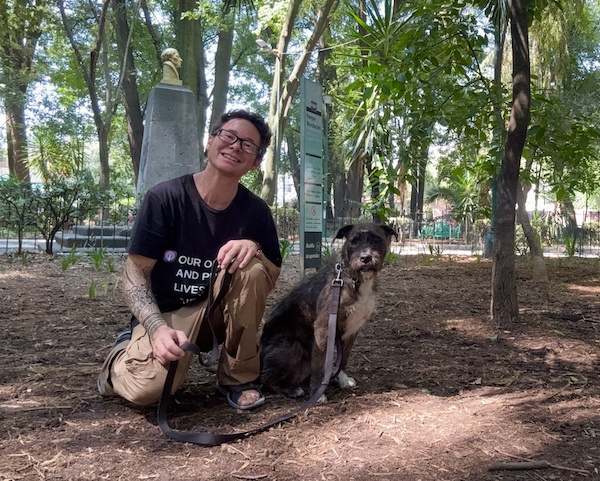
Teaching your dog to be comfortable wearing a muzzle is a good idea for a number of reasons. One of them is safety on a hike: if you don't trust your dog 100% around dogs, critters, people etc., having her wear a muzzle will help you relax. If your dog doesn't like strange dogs invading her personal space, but you would like to take her hiking in places where you will occasionally encounter off-leash dogs, having her in a muzzle keeps everyone safe. (Having her on a leash doesn't do that, because strange dogs may still run up to her.)
When I have Grit off leash in an area where we might encounter dogs or people, I usually have her wear a muzzle. She is good with dogs who keep out of her way or greet her politely, but she is not the kind of dog who appreciates rambunctious dogs who come barreling up to her.
This week we bring back Dr. Jessica Hekman to talk about what the science says on topics like when or if you should spay and neuter, how socialization actually works, and more!
Everyone in positive training has heard it: When you know better, do better.
But that "know better" is going to look a little different for everyone. Sometimes, we need to hear the same message said multiple ways from different people before it truly sinks in. At FDSA we give out a lot of training advice. And if i say so, most of it is pretty dang good. But some moments stand out as better than good.
Better than "better," even.
For today's blog post, we turned to our students to find some of those gems — the moments that stood out to them as major "aha" moments, the things that changed their perspective, shifted their training, and helped them become "better" when training their dogs.
Ever wondered what the benefits are to canine massage? Lori Stevens joins me on the podcast to talk about how canine massage can benefit our dogs.
Why choose us?
We offer a variety of online training solutions designed to help you and your furry friend achieve success
World Class Trainers
Learn from professionals with years of experience in canine behavior
Proven methods
Science-backed positive reinforcement techniques that actually work
Personalized approach
Programs tailored to your dog’s unique needs and personality
Engaging lessons
Keep training exciting with interactive exercises and games
Services we provide
50 000+
Happy customers