Blog Page
Explore expert tips, training insights, and helpful stories designed to support you and your dog at every stage of learning. From behavior guidance to practical training advice, our blog helps you build confidence, improve communication, and strengthen the bond with your dog.
All publications (662)
Today I took a shower with a spider.
It wasn't like I volunteered for this; I hopped in and was well along in the process of getting clean before I saw it in the shower pan. And this wasn't a tiny spider – it was a big one. I'd' say 3″ around or so.
Ok. Maybe it was closer to 1″, including the legs. But it FELT like 3″ when I realized that I was not alone.
I'm not afraid of spiders but I also do not choose to take showers with them. I was particularly unthrilled about the thought of one crawling on me when I shut my eyes to rinse my hair. But I could manage, and anyone watching would not have been aware of the turmoil going on inside of my mind as I kept half an eye on that spider and the rest of my brain on getting done with my shower.
And then my husband unexpectedly opened the bathroom door. I startled, screamed, and am quite lucky I didn't go through the glass.
What happened?
My husband has seen me shower before- after 20 years we're well past any issues there. And I had been showering with that spider for a couple of minutes already so that wouldn't have caused my reaction. But in my hyper aware state I seriously overreacted, likely risking my health a good deal more than anything that spider could have thought up to do to me.
When we are agitated, we are hyper aware. That internal state of awareness may or may not show on the outside, but the effort to continue on in a normal fashion absorbs most of our capacity.
Now let's talk about dogs.

A lot of people think of competition obedience as 'boring' — not Julie Symons! Julie and I chat about keeping obedience skills fun through the use of games... and she gives us a peek into her Obedience Games Starter and Obedience Games classes!

"Urgh – she broke her start line," "He shut down when he realized I didn't have a cookie on me," "I don't know what to do next." You've heard each of these lines – perhaps adapted for your sport a little. I know it's a rare week that I don't hear something in this vein.
We train, work and play with living sentient beings. That is wonderful. Something to treasure. Something to complicate our lives. Sigh.
When things go wrong in dog training it's a little like standing at a crossroads in the middle of a very thick forest. It can feel like we have lots of choices to make and no way to see where the paths we are taking will lead. If you are isolated regionally from progressive positive training, choosing what and when to train can seem insurmountable.
If you're prepping a dog for competition, there's a lot more to think about than just the skills of your chosen sport. Ann and I talk about what those 'things' are and her current class on preparing for the competition ring.
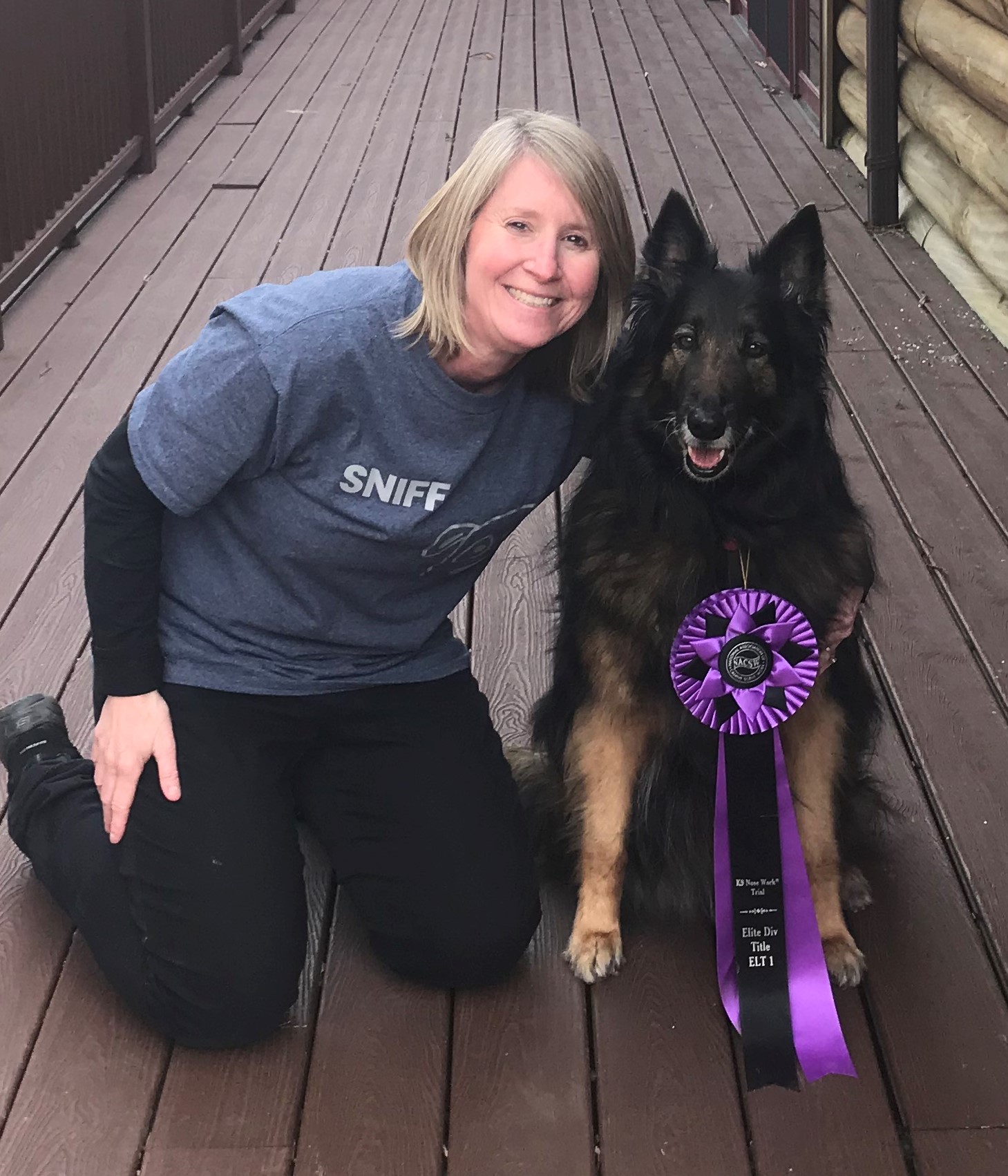
This is an excerpt from one of Julie Symons' Obedience Games lectures along with a few other thoughts about dog training!
When it comes to dog training, everything we need to train and prepare for trialing can be overwhelming. Skills, precision, ring confidence, OUR confidence, weaning off primary and secondary reinforcers, etc. We all have goals and ambitions and want to do well.
We start that journey by building a strong emotional foundation when training our dogs. First and foremost we want a happy, motivated, secure, and engaged dog!! I don't worry about a lot of precision early on. The key is to prepare your dog by training smart and reinforce improvement on the way to perfection. The path to perfection or as close as we can get is the journey you take with your dog, not something you achieve all at once early in their career.
What does "training smart" mean?
It means being present when training and having a plan. It's not training when you don't feel well or in a bad mood. It means to make what training you can get to count and make a difference toward progressing.
If you don't have a lot of time to train, then make the most of the time you do have to make it productive and effective. Don't rush or get sloppy.
Make it your goal to rehearse correct behavior and be consistent with criteria as much as you can. And remember, no dog trainer trains perfectly. You constantly have to make quick decisions. To paraphrase Bob Bailey … you need to make a decision as the next one is right around the corner!
So you have to decide what/when to mark, when to release (ie., to avoid a crooked front), when to ask for more, etc. Don't fret over missed decisions, just get ready for the next one. Make it your goal to grow and expand as a trainer by experimenting and approaching it like an art form!
Julie Flanery joins me to talk about her positions class, clean communication, the importance of good mechanics in getting trained behaviors more quickly, and more.
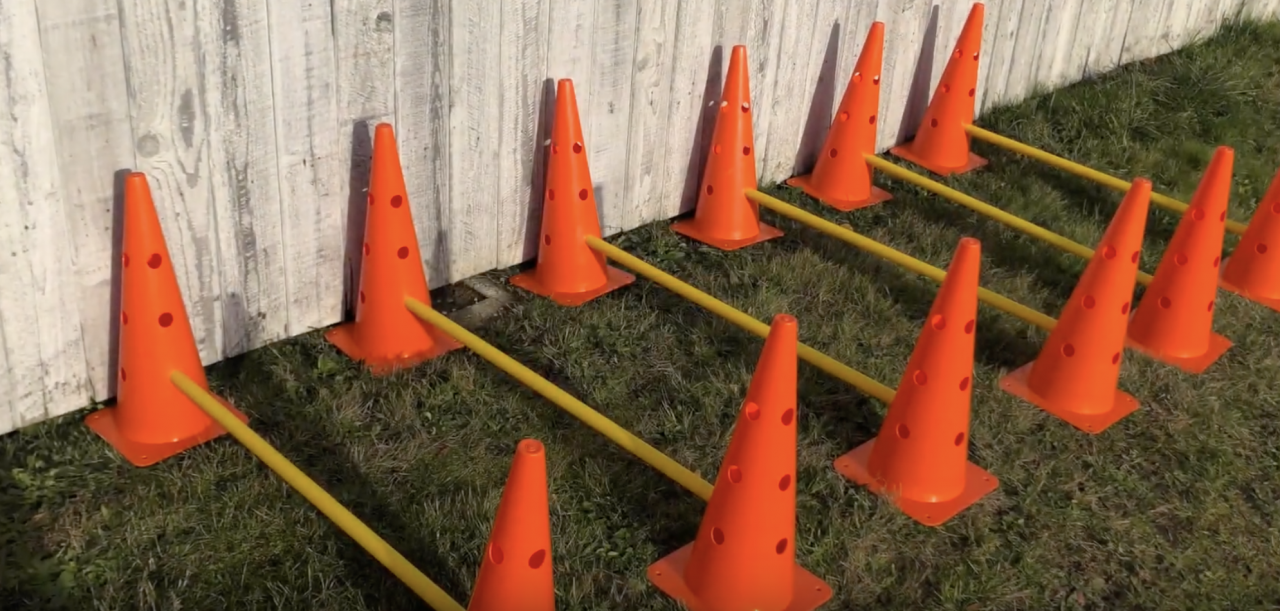

My dog can already trot through cavalettis, so what do I do now?
The cavalettis can be a daunting piece of equipment to buy or make, especially when traditionally it is only used as a trotting exercise. However, cavalettis are actually one of the most versatile pieces of equipment you can use for canine conditioning.
Chrissi Schranz, Chelsey Protulipac, and Tania Lanfer join me to talk about dealing with problem behaviors like resource guarding, jumping, counter surfing, and unwanted chasing!
In part 1 of this blog post, I discussed management, training and the intersection of the two. Now let's turn our attention to the concept of maintenance.
Behaviors that I am maintaining are well trained, well understood, and have moved into the realm of habit.
Here's how that works:
After I have called my puppy into the house hundreds of times, and I have backed up her good responses with a cookie and my genuine praise, then I will stop rewarding most of her responses with a cookie and I'll offer only praise or a life reward (to be discussed in a further blog post). People often ask me how I know when it's time to start reducing reinforcement and the answer is relatively simple:
When I am no longer impressed by the good behavior.
Pet Professionals Program and FDSA instructor Nicole Wiebusch joins me to chat about her upcoming PPP Workshop and Rally classes!
I'll refer to these terms over time, so it might help if you have some idea what I'm talking about.
When I talk about management, I'm talking about preventing your puppy or dog from rehearsing bad behaviors, either while you decide to start training or until she outgrows whatever misbehavior is currently expressing itself or….forever, if that is your choice.
Management may involve applying external controls to the dog, or it may mean structuring the environment.
I'm joined by Dr. Jennifer Summerfield, Amanda Boyd, Casey Coughlin, and Sara Brueske — our Pet Professionals Program instructors — to talk about working with puppies!

Ok, I admit it! At heart I am a scientist. My training is in maths, physics and psychology – I'm proud of my geek status and am happy to own it!
However, the people I train on a daily basis are not geeks. They do not get a thrill when confronted with a new scientific bit of jargon to digest; they just want to be able to DO THE THING, dammit!
So, with this in mind, I do my best to avoid jargon and technical speak with people who really don't care about the nitty gritty – they just want a well-behaved dog. However, I often find the pedant in me is offended by this – a big part of me also believes that jargon has a place and many of the problems we see in dog training today stem from a lack of understanding around the words commonly used and how we, as trainers, use them.
Today I'm going to indulge my inner pedant and look a bit deeper at the jargon vs the vernacular for two very commonly interchanged sets of words - and why the nitty gritty does matter. Remember that the words we use shape the way we think, which changes our behavior. This is why your language influences how you interact with the world around you – and that includes your dog. Here are the words that cause me the most angst!
Cue vs Command
Trainers tend to swap these all the time. However, they have very different implications – which in turn change the way you interpret your dog's behavior.
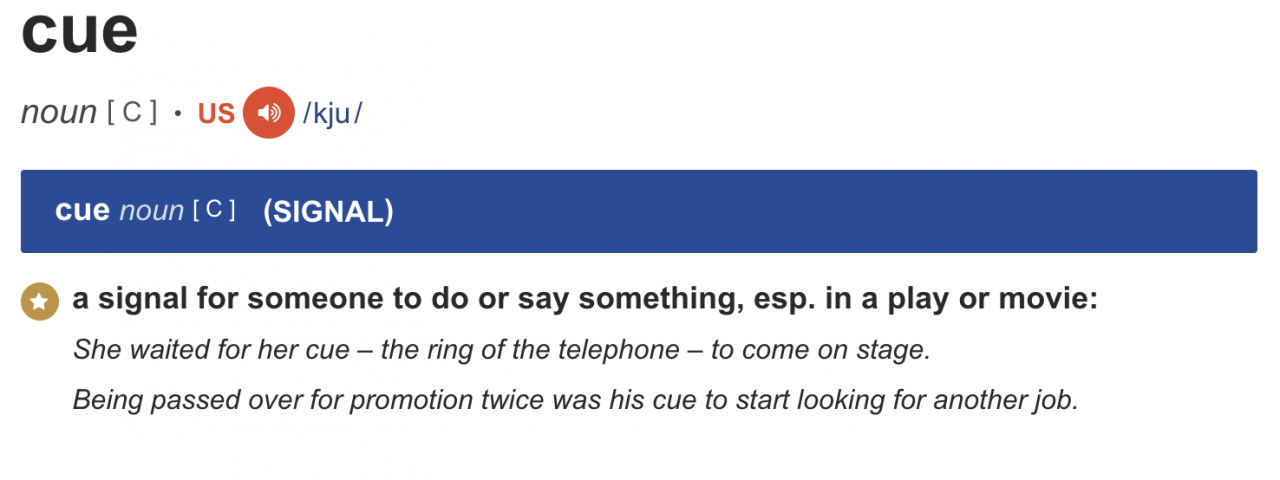
Here's the dictionary definition of CUE:
We can clearly see from this that "cue" is just a signal – it carries information regarding what might be an appropriate course of action at that point in time.
In scientific jargon, a cue is also known as a "discriminative stimulus" – a mouthful that basically means "something that provides information about a possible outcome for a particular behavior."
For a simple example, a rat in a cage might learn that the lever that releases food pellets ONLY works when the green light is on. The green light discriminates when lever pulling will, or will not, be successful.
In animal training, all a cue does is give the animal an indication that now is a good time to do behavior X for a given outcome. If the animal does not respond with the associated behavior, there is no judgement; the animal is not 'disobedient' or naughty. It just didn't respond to the cue.
From a dog training point of view, if we think in terms of CUES, when we give our dogs a signal to do something, there is no expectation of compliance. I like to think of cues as 'invitations' to the dog to perform a given behavior for the possibility of experiencing a beneficial (to the dog) outcome.
It is worth noting that CUES don't 'make' behaviors happen! Cues set the stage to inform the learner that behavior X is likely to pay off - now. However, it is the historic results of performing that behavior that will influence how likely it is to be repeated in the future.
As an example, if your dog discovers that sitting by the backdoor results in you opening it for him, he is more likely to sit there when he'd like to go outside in the future.
His cue to sit-by-the-door might be a full bladder. The outcome is he gets to pee and feel better. His sitting-by-the-door is your cue to open it – your outcome is you don't have to clean the floor!
It doesn't make any sense to say that the dog 'disobeyed' his bladder's signal that it was full, or that you 'disobeyed' your dog's signal that he needed to go out. What 'made' him sit by the door was the consequence of being able to pee; what 'made' you open the door was the consequence of avoiding mopping.
Let's contrast this with COMMAND:
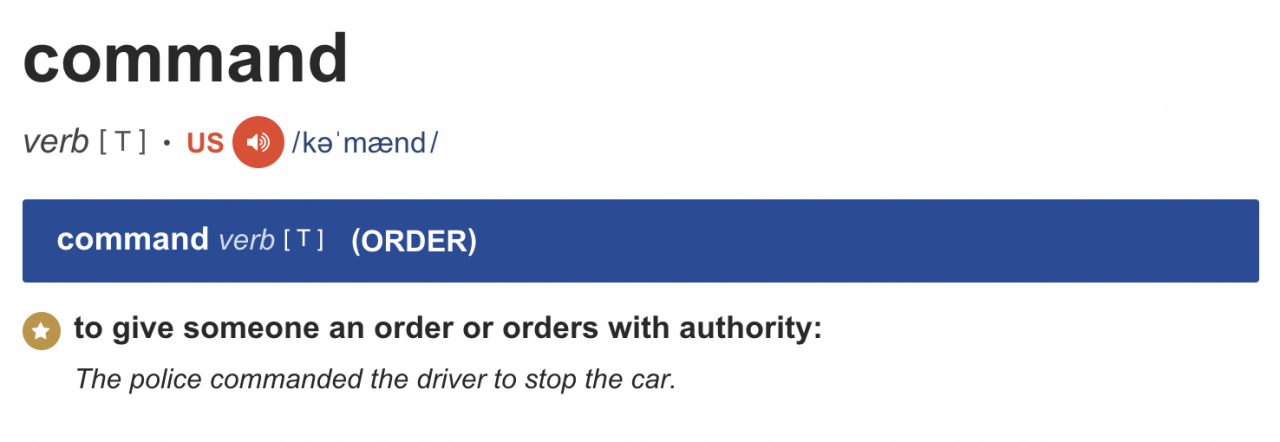
Commands are something else again. A command is (I suppose) a subset or type of cue – it provides information about what to do in a given situation. However, as seen in the definition, obedience IS an expectation. If you don't respond to a command you can expect a very unfavourable outcome!
Commands always carry the threat of 'or else'. There is always a judgement made on the individual receiving the command: if they comply, then they are 'obedient'. If they don't, then they are disobedient or 'naughty', and receive an unfavourable (to them) outcome as a consequence of their lack of compliance.
Because of this implied threat for non-compliance when we use the word 'command', as trainers we are mentally primed to deliver a 'correction' when our dogs fail to respond to a command. You may not have a problem with that, and that's totally your choice. However, it very much changes the dynamic of the training relationship. If you are operating under the 'commands' mindset, then your dog is working under 'have to obey' rules. This means your dog may not be responding to you because he wants to, and enjoys it, but more to avoid the corrections that happen if he doesn't. Food for thought perhaps.
'Reinforcement' Does Not Equate to 'Reward'
Another source of confusion in the 'training process' due to language, is between these two words: Reinforcement and Reward. Although people use them interchangeably they DO NOT mean the same thing. Why does it matter? I mean, surely, they're close enough. Again, it comes down to what is implied (or not) by the word we use.
Definition of Reward:
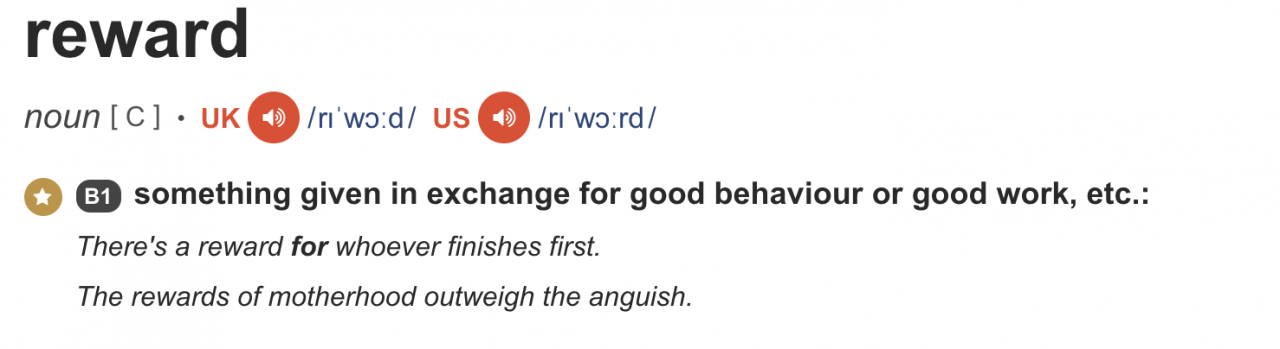
Generally speaking, rewards are seen as pleasant outcomes received for 'good' behaviour. However, rewards don't actually influence behaviour. I might find a purse and hand it in to the police but if the reward I get is a voucher for a free dinner at a pub (and I don't frequent pubs) then that reward is unlikely to make any difference to whether I hand in the next purse I find.
Definition of reinforcement:
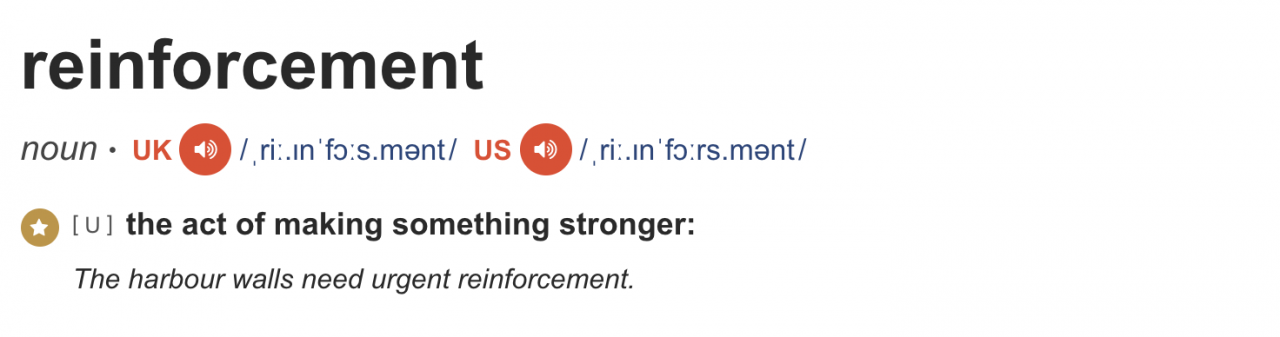
What's the first thing you notice about this definition? For me it's the fact that it has no implication of anything good, nice or pleasant. And that is just fine for what we, as trainers, mean too!
To reinforce means to make stronger. Simple as that. If you reinforce a behavior, you make it stronger, more frequent and/or more intense. ANY outcome that affects the preceding behavior in this way is a reinforcer – for that behavior.
There have been experiments done showing that even something as aversive as a painful shock can, under the correct circumstances, reinforce behavior – so the animal does the behavior that results in the shock more frequently, more intensely and with more vigor. Mind blown? Mine was when I read the research.
On the flip side, if a consequence DOES NOT alter the behavior by making it stronger, then, by definition, it's not functioning as a reinforcer. So, cookies, toys, praise and cuddles might be nice, but if they don't change the way your dog behaves in the way you expected, by making the desired behavior stronger or more likely to happen, then they are not reinforcers in the context in which you are using them.
The confusion comes because in many contexts the things we use as 'rewards' DO function as reinforcers. That's why we use food, toys, praise and cuddles to train our dogs! The problem comes when those things fail to strengthen a behaviour. The cookie/toy etc may be nice. It may be something the dog likes; but if at the moment we offer it, the dog would prefer access to something else, the 'reward' will be ineffective as a reinforcer.
And just to muddy the waters further, sometimes things WE think of as 'punishment' can reinforce behaviors too! No wonder people get confused.
So, think of it this way: all animals are motivated to get access to outcomes they want and avoid/escape outcomes they don't. If your dog wants to get access to the food/toy/praise etc you have to give, then the behavior he does that achieves his goal will be reinforced – and get stronger.
If, on the other hand, your dog would actually prefer access to the cute little poodle on the other side of the road, and the things you can provide don't interest him in that moment, then you can't use them to strengthen behaviors. They may still be 'rewards' but they are not functioning to change his behavior in that scenario.
In a nutshell, rewards are given to show appreciation for 'good' behavior. They may or may not make a behavior stronger.
Reinforcers are consequences that alter behavior by making it stronger and more likely to happen in the future. They may or may not fit our idea of a reward. Reinforcers are situational, fluid and can change rapidly as events change.
Our opinions don't matter! If a consequence results in a stronger behavior, it is a reinforcer – by definition. Only the dog decides what is or isn't reinforcing in any given moment. It's no wonder we love dogs that want our food and toys over anything else is it? It makes things so much easier to understand.
Language and Dog Training
Language shapes our world view. It influences how we perceive things and changes our behavior accordingly. Whether you think in terms of cues or commands, rewards or reinforcers; these words will lead you to behave in certain ways, to the benefit or detriment of your training experience, and your dog's!
Choose your words carefully as they will change your reality.
In honor of the start of the new FDSA – pet professionals program, (FDSA-PPP) Denise Fenzi did a free webinar open to anyone. She offered to review videos and answer questions on any topic someone wanted to discuss!
The following is the recorded webinar. Enjoy, and feel free to share with anyone who might benefit.
If you'd like to be notified of random learning opportunities such as this one, don't forget to subscribe to our mailing list.
The questions covered include barking or noise during work, focus in heeling, pivots and pocket hand, teaching handler scent discrimination/articles, loose leash walking via the circle method, developing a working relationship, dealing with lack of (human) motivation, building duration for heelwork, and more!!
This week we talk to FDSA PPP Instructor Liz Laidlaw on training options, and how to decide what approach you'll use based on the dog - or client - in front of you.
For July 4th, we brought together Amy Cook, Ph.D.; Deb Jones, Ph.D.; Jennifer Summerfield, DVM; and Jessica Hekman, Ph.D. for the latest edition of the Science Cafe!
Below is the recording from their hour-and-a-half live webinar discussion of phobias, focusing on noise phobias in particular. The summer holidays can be the absolute WORST time of year for many dogs and their families. So these doctors came together to chat about phobias in general, what happens to the body physically when startle responses are triggered, and what can be done to help such as management, classical conditioning, and medications & supplements.
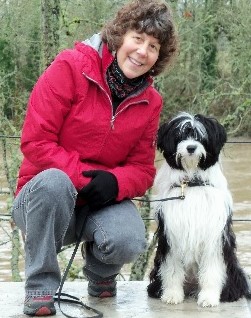
When asked "Who Are You?" regarding our involvement in dog training, we often have a split personality.
Am I a training geek? Amazed by all the nuances in training? In awe of my dog's ability to learn complex skills and tasks? Learning all that I can about the "science of training"? Exploring around the edges, such as with concept training?
Am I a dog sport trainer? Working with my own dogs as well as my students' dogs in helping them reach their goals of a true partnership in training and their competition goals? Exploring the most up-to-date training methods for my sport? Always on the search to make myself more clear and more valuable to my dog? Creating a partnership that includes concepts such as consent?
Am I a pet dog trainer? Working with inexperienced handlers who have yet to learn how to communicate with their dogs effectively to meet their seemingly simple goals of a well-mannered pet? I say seemingly, because in reality the work of a laymen is often ten-fold the work of an experienced trainer. Much of what they must learn, we now do by rote.
In truth I am all three. That doesn't mean, though, that all three of my "personalities" view training or apply the same techniques in the same way.
In honor of the recent launch of the new FDSA Pet Professionals program, I have the Badials and Christina Hargrove on to talk about what it's like to start a dog training business.

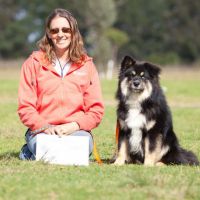
This is an excerpt from a free ebook by Liz Laidlaw for the FDSA Pet Professionals Program. See a link to the full book at the end of this post for more!
The science of learning is based in the academic realm of psychology. This means that some of the language of learning and cognition is jargon that may not be familiar, or may use words in a different context to their more popular usage. Trainers tend to talk a lot about the types of training and the "four quadrants," so we will discuss those here to get us started.
It's totally not helpful to be told your cues are late - without any idea what to do about it. Today Loretta and I get into why timing is so important for agility and how you can work on yours!
Why choose us?
We offer a variety of online training solutions designed to help you and your furry friend achieve success
World Class Trainers
Learn from professionals with years of experience in canine behavior
Proven methods
Science-backed positive reinforcement techniques that actually work
Personalized approach
Programs tailored to your dog’s unique needs and personality
Engaging lessons
Keep training exciting with interactive exercises and games
Services we provide

50 000+
Happy customers