Blog Page
Explore expert tips, training insights, and helpful stories designed to support you and your dog at every stage of learning. From behavior guidance to practical training advice, our blog helps you build confidence, improve communication, and strengthen the bond with your dog.
All publications (662)
Does your dog struggle to regulate their own arousal? Join me and Sara for a conversation on how to help them manage things, and then (ultimately) teach them to manage it themselves!
Join me as I interview Erin Lynes about building confidence in our canine partners — we talk about clear communication, natural levels of confidence (and how much you should expect to be able to move the needle), the "Mr. Rogers" technique, and more!
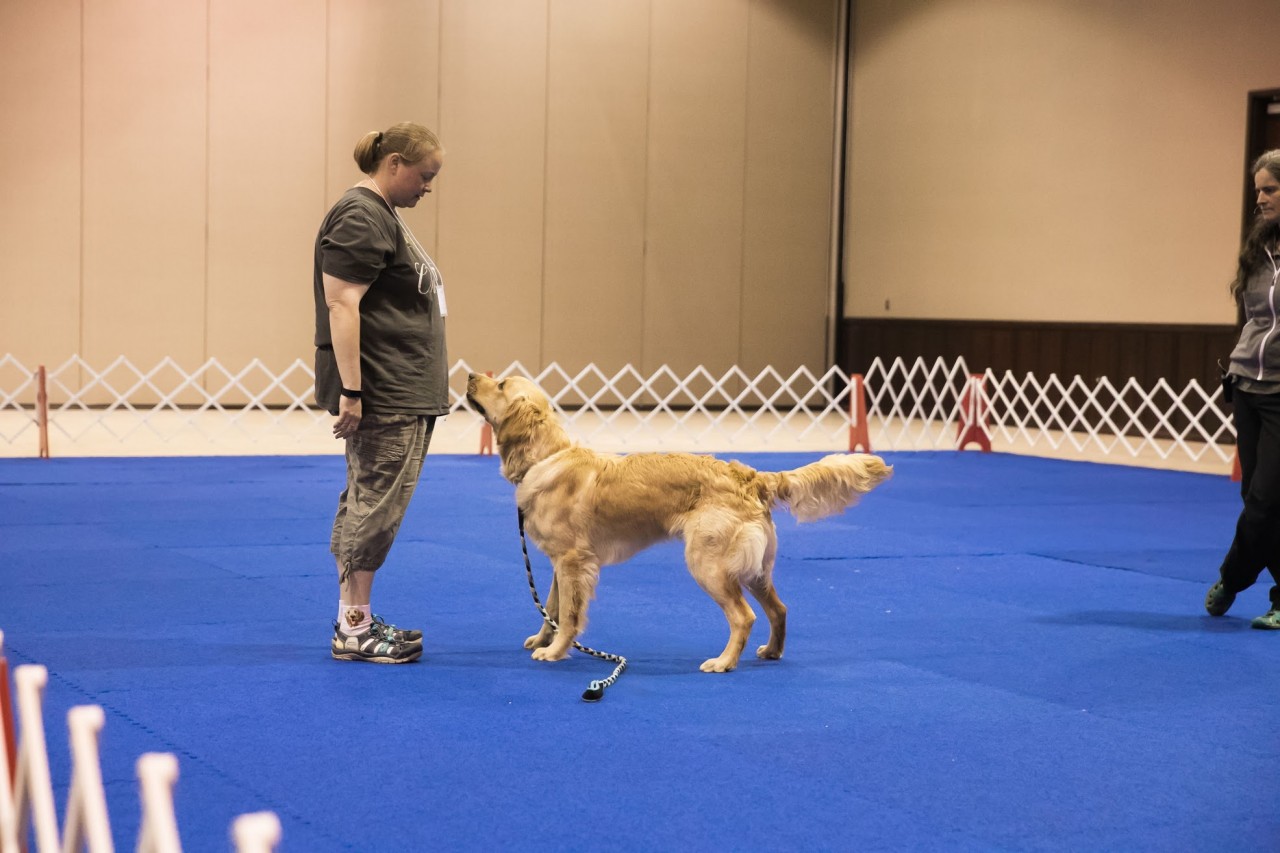
It's common to ask, "Does my dog understand the cue?" — especially when a dog performs a behavior perfectly at home but struggles anywhere else. Often, we assume our dogs have a deeper understanding of a behavior than they actually do. When a dog can't perform a cue to criteria, it usually means a building block in the training process was skipped, not that the dog is being stubborn or uncooperative.
In this episode Ashley walks us through why she's turned to conditioning to help her young dogs develop impulse control, body awareness, and precision — and how she's adapted it to help any dog that would benefit from strengthening those three skills.

As a behavior consultant working in sport, working-dog, and pet-dog environments, one theme remains consistent: we want to set our dogs up for success. Whether we're training for obedience, rally, agility, disc, detection work, or tackling big behavior concerns, positive-reinforcement trainers break training into small, achievable steps. By minimizing mistakes, we reduce stress and build confidence.
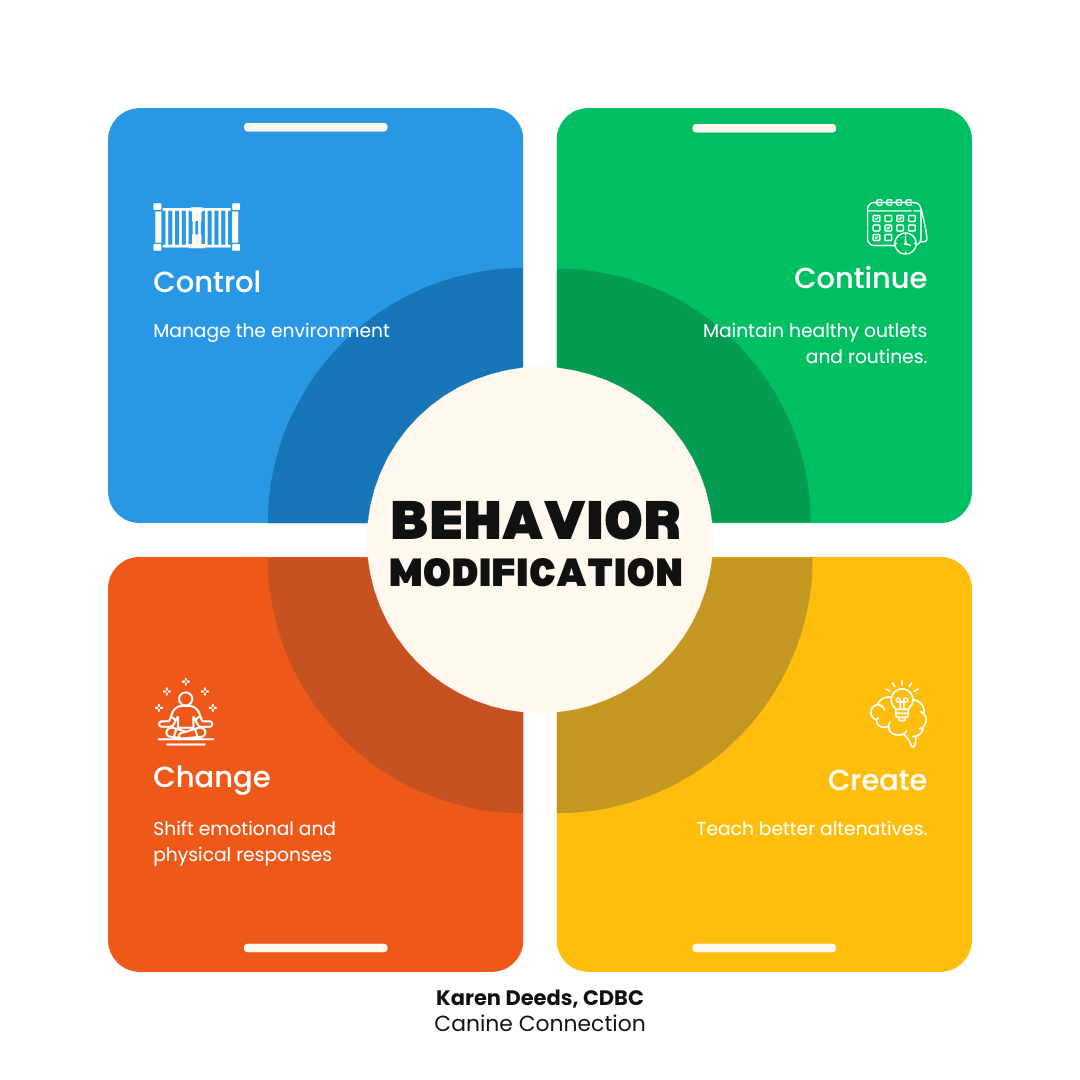
To make this simple for dog guardians, I often rely on a simple framework I call the Four C's of Behavior Modification: Control, Continue, Change, and Create.
1. Control: Manage the Environment
The first step in any behavior case, is to control the environment – blocking opportunities for the dog to rehearse the behavior we're trying to fix. This isn't about restricting your dog's life. It's about replacing tough situations with ones that support progress Without this, dogs keep landing in the scenarios where 'bad' choices are inevitable…and frustrated humans may assume the dog 'knows better.' Think of it like this: an alcoholic living in a bar won't stop drinking. They need distance from the trigger while learning new skills and stabilizing their emotions. Our dogs deserve the same courtesy – we must keep them 'out of the bar.'
If we skip this step, the dog is frequently put into situations where poor choices are likely. When this happens, guardians may assume the dog "knows better" and resort to punishment. But as the saying goes, an alcoholic living in a bar will struggle to avoid drinking. Until they learn new skills and their body adapts, staying out of the tempting environment is essential. Our dogs need the same courtesy—we must keep them "out of the bar."
Examples of effective management include:
- Feed resource guarding dogs in separate rooms.
- Remove high-value items such as bones or chews unless dogs are separated.
- Block windows or change rooms to prevent reactivity and window barking.
on its own.
2. Continue: Maintain Healthy Outlets and Routines
Management doesn't work alone. We must continue meeting the dog's physical and emotional needs. Sniff walks, enrichment, fitness work, structured play, and predictable daily routines all help lower stress and anxiety. A stable emotional state makes learning easier and behavior change faster.
3. Change: Shift Emotional and Physical Responses
- Desensitization - gradually exposing the dog to the trigger at a tolerable level
- Counter-conditioning - pairing the trigger with something positive to eliminate fear or anxiety
- Differential reinforcement - teaching and rewarding alternative responses to reduce frustration, conflict or behavior not rooted in fear
When the emotions shift, the behavior shifts. We're transforming the dogs internal state, not just the outer actions.
4. Create: Teach Better Alternatives
Finally, we must create appropriate behaviors to replace the unwanted ones. Ask yourself: What do I want my dog to do instead? If we don't teach this clearly, the dog is left guessing.
Replacement behaviors might include moving away, checking in with the handler, settling on a mat, targeting a hand or object. These give your dog a dependable script when life gets tough..
The Four C's in Summary
- Control the situation to prevent further rehearsal of unwanted behavior.
- Continue routines and activities that support emotional and physical well-being.
- Change the dog's emotional response through systematic behavior work.
- Create new, appropriate behaviors to replace old habits.
Together, these four steps build a humane, effective, and sustainable path to real behavior change – one thoughtful step at a time.
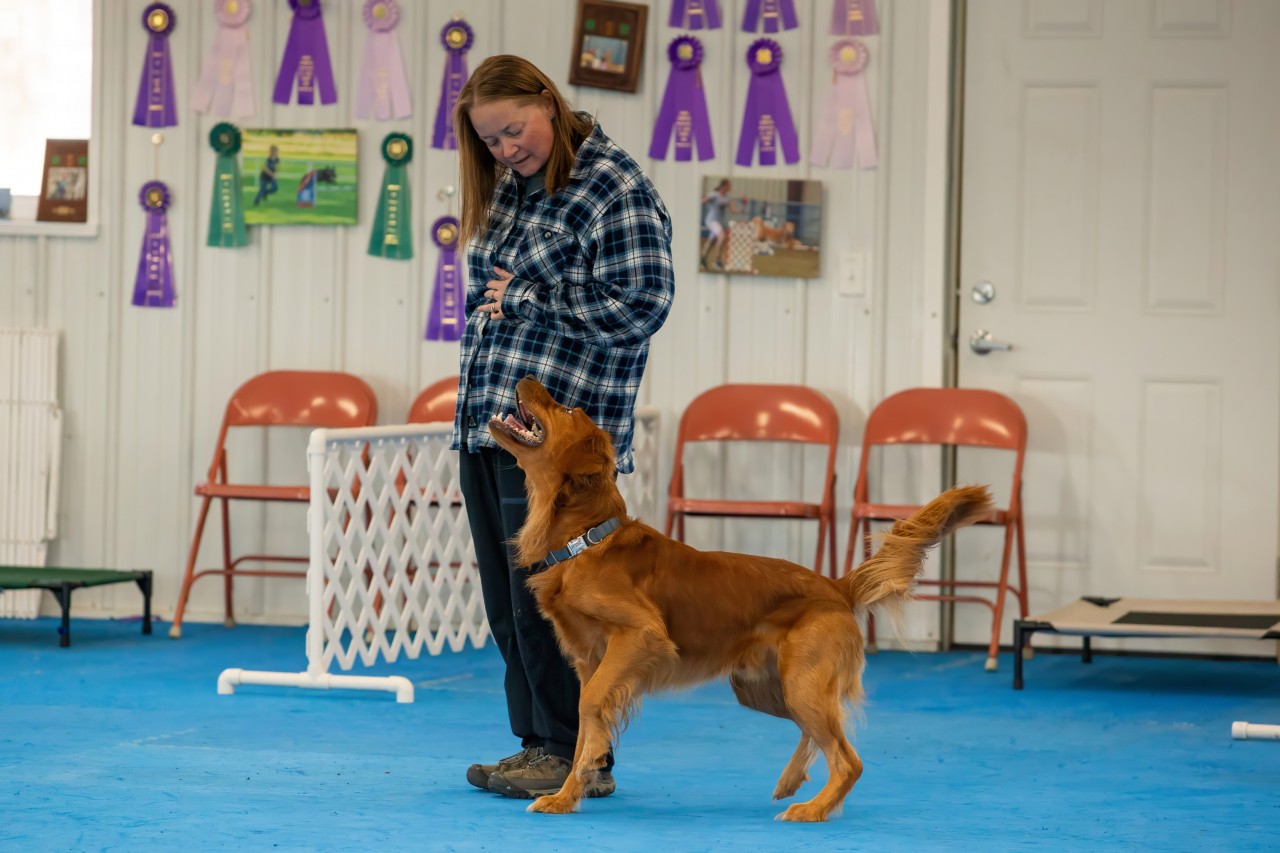
If you're working on heelwork, you're going to encounter mistakes. Crooked sits, forging, lagging, loss of attention — they're all part of the process. The key to handling heeling mistakes is recognizing that errors aren't failure; they're feedback. When a dog makes a mistake during heeling, it usually means the criteria were too high, the environment too challenging, or the dog wasn't prepared for that level of difficulty.
Instead of pushing through or correcting the dog, use mistakes as information. Occasional blips are expected. But if mistakes start happening repeatedly, that's your cue to pause and reevaluate your training plan. Backing up a step or two is not a setback — it's how you build clarity.
Whether working with your first agility dog or your fifth, the right foundation can play a huge role in your team's success. Join us for a conversation on how to build the skills you'll need as a team... even if you have minimal access to equipment.
It's easy to fall into the habit of only practicing skills you know that you and your dog are good at — in this episode, Julie and I talk about how to avoid that issue, and how to continually evaluate where your nosework dog is strongest, identify holes, and ensure you continue to progress in your training together.
The life stages our young sports dogs go through can come with dramatic changes and significant transitions - so what's normal? How do we decide what to prioritize? What are the current best practices when it comes to socialization? Join us for a conversation on all things puppy and adolescent!
Crystal Wing joins me for a conversation on how to build your training around a great relationship with your dog by balancing mindset and mechanics.
Ever have a situation where your dog refuses to move forward? In this episode Kathy Sdao and I talk about what balking is, why we think dogs do it, and what we can do about it.
Join handler fitness trainer, Liz Joyce, and me for a podcast all about how you can start — or restart — your fitness journey, gently.
Join handler fitness trainer, Liz Joyce, and me for a podcast all about how you can start — or restart — your fitness journey, gently.
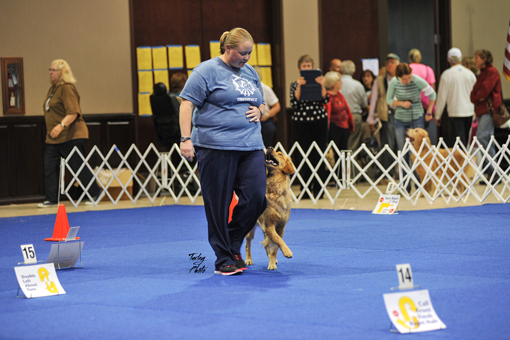
When you and your dog reach the Master level of rally, you'll face a whole new challenge: master rally signs. These signs go beyond the basics of sit, down, and heeling. They ask for precision, teamwork, and independence all at once. For many teams, this level is where rally really gets exciting—but it can also feel a bit intimidating. The good news is that with the right training plan, you and your dog can tackle these signs with confidence and even have a lot of fun along the way.
Heather and I discuss what skills you need to earn your CGC, the sticking points that can cause trouble for some teams, and how to decide if your dog is a good fit for therapy work from there.
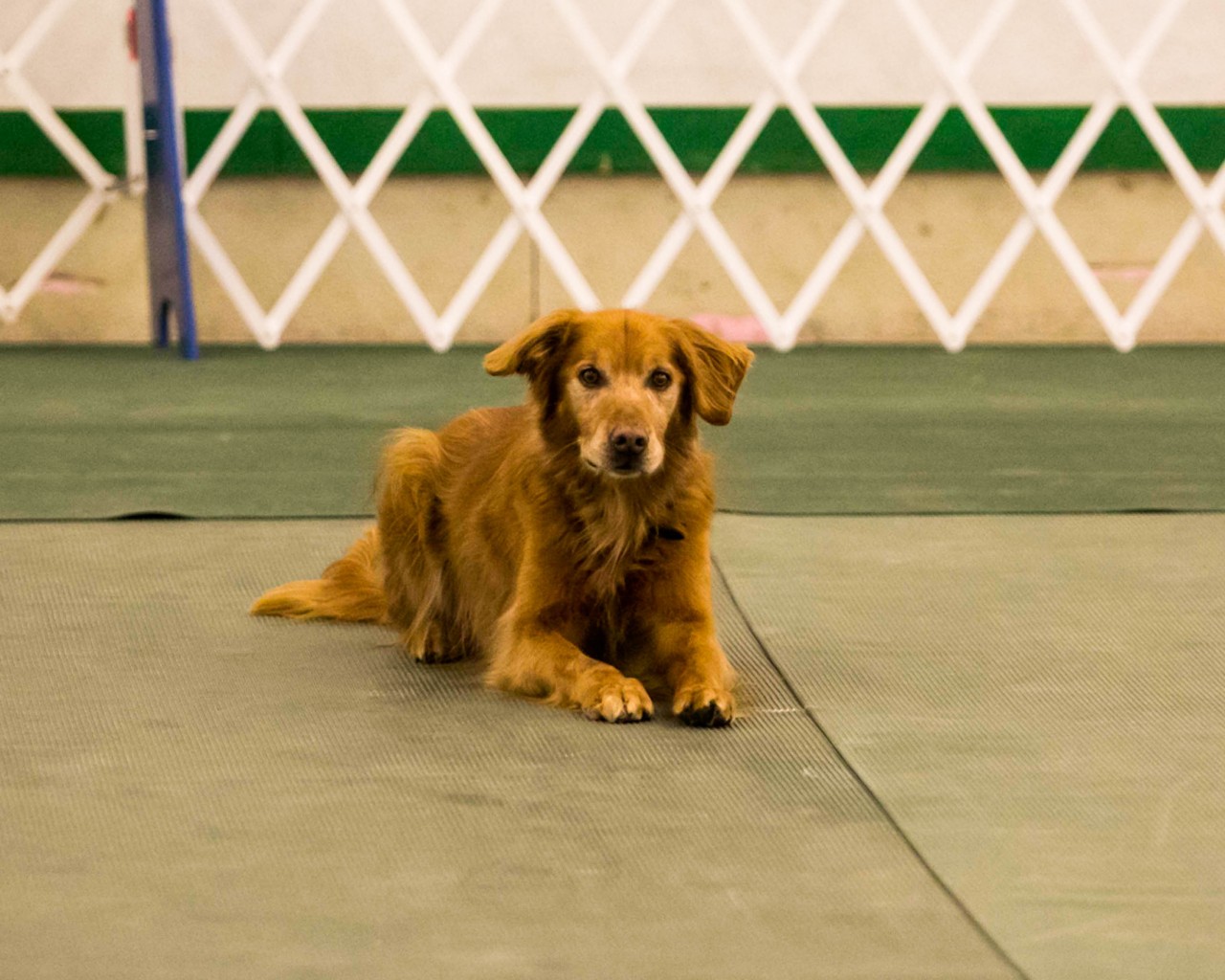
Using props for stays isn't required, but it can be incredibly helpful when you're first introducing the concept of stillness. Props provide structure, give dogs a clear physical boundary, and act as reminders to hold position. From platforms to gates and stations, the right prop can make teaching stays easier, clearer, and more effective.
Control Unleashed games and patterns can be a powerful tool whether you're working to rehab reactivity or build bomb proof sports behaviors. But how we do go from just learning the games to actually using them in the real world? Kim and I discuss exactly that in this week's podcast!
Agility puts a lot of strain and stress on our dogs' bodies... but fitness training can go a long way to ensuring they still enjoy a long sports career. Join me and Ashley for a conversation on how workling on canine fitness can improve your dog's agility skills, especially when it comes to technical jump training!
Why choose us?
We offer a variety of online training solutions designed to help you and your furry friend achieve success
World Class Trainers
Learn from professionals with years of experience in canine behavior
Proven methods
Science-backed positive reinforcement techniques that actually work
Personalized approach
Programs tailored to your dog’s unique needs and personality
Engaging lessons
Keep training exciting with interactive exercises and games
Services we provide
50 000+
Happy customers