RA610 Creating a Musical Freestyle Routine
This course is designed for those who have never created a freestyle routine or who struggle with putting a routine together. We’ll go over music selection, sequencing behaviors, musicality, use of transitions, handler interpretation, creating meaningful verbal cues, show attire, freestyle vs heelwork to music, what judges are looking for and more! While there are many organizations that convey musical freestyle titles, this course will be geared toward RFE and WCFO style of musical
Course Details
This course is designed for those who have never created a freestyle routine or who struggle with putting a routine together. We’ll go over music selection, sequencing behaviors, musicality, use of transitions, handler interpretation, creating meaningful verbal cues, show attire, freestyle vs heelwork to music, what judges are looking for and more! There are several organizations that convey musical freestyle titles, and this course will help you be successful in any of them!
Some may choose to use the course as a catalyst to create a routine with a single piece of music through out the six weeks. Others may choose to create short sequences with different pieces of music and explore the possibilities! Either way, you are sure to be inspired no matter what level you register for!
Syllabus
This syllabus is a general outline. Some topics will cover multiple weeks or over-lap with other week's curriuculum. Creating a musical freestyle routine is a creative process and is not always linear. Flexibility is an asset and change is a constant in the creation of a one-of-a-kind freestyle routine.
Wk 1:
- Considerations and an Overview of the Process
- Assessing transition behaviors
- Freestyle or Heelwork?
- Choosing Music
Wk 2:
- Choreography: Getting Started
- Getting it on Paper
- Musicality and Sequencing
- Opening and Closing Poses
Wk 3 and 4:
- Sequencing
- Punctuation Points!
- Transitions and Flow
- Mapping it out
- Costume Considerations
- Integrating Props
- Scoring Considerations
Wk 5:
- Handler Interpretation
- Timing of cues
- Over-lapping sequences
- Choreography Cues
Wk 6:
- Training, Practice, or Rehearsal?
- Back Chaining
- Ring Preparation
- Reinforcement vs Stamina
Prerequisites & Supplies
Teams should be able to perform primary transition behaviors of spins, circles and passing through the handler's legs. Ideally teams should also have a few addtional behaviors they may want to incorporate into a routine. These do not need to be complex or difficult behaviors, but they should be fairly fluent and the dog should be responsive to the cues. Verbal cues are preferred but it's fine if the dog needs some aid with slight hand cues or body prompts.
With little exception, this course is not about teaching new moves and behaviors, but using existing behaviors or behaviors that are far enough along in the training process that they can be included in the choreography, or sequenced together with other behaviors.
Students will need access to a music player with speakers or the ability to project sound.
While it is not always necessary to have a large working area, at least a room sized area will be needed to be able to work sequences. Larger areas will be beneficial. Working areas may be indoors or outdoors.
Instructor
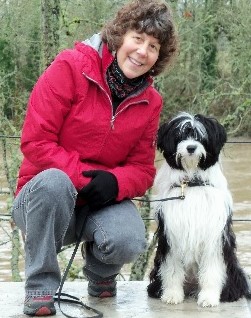
Julie Flanery
Faculty
Julie Flanery (she/her), CPDT-KA has been working professionally with dogs and their handlers since 1993. She focuses on the needs of the dog and helping people form a strong relationship, through clear communication, and positive reinforcement. She has placed Obedience...