RA511 Positions, Laterals and Backing
In Rally-FrEe and musical freestyle, everything flows from four core positions: left heel, right heel, center, and behind. But the real magic—and the real challenge—comes when your dog can move with accuracy and confidence from those positions in any direction.
Course Details
If you’ve ever struggled with:
- Inconsistency in positions
- Losing position in laterals or when backing
- A dog who is unsure of where heel position is
- Losing precision when you remove food, targets, or props
…this class is designed to solve those problems at their root.
We’ll break down the mechanics and give you the handler skills to clearly communicate what you want—so your dog understands, not guesses. Through thoughtful use of props, shaping, and reinforcement, you’ll build strong value for accuracy, then systematically transfer those skills to reliable verbal cues without dependency on training aids.
You and your dog will develop:
- Clean, well-defined positions
- Smooth, controlled pivots and lateral movement
- Confident, straight backing
- Clear communication that holds up under pressure
Not a freestyle team? You’ll still benefit. These are foundational skills for obedience, Rally, and any sport where precision and teamwork are valued.
Teaching Approach
Lectures are released weekly and include written and video descriptions of each exercise in a step-by-step approach. Lectures and exercises (both specific weekly exercises and the entire course) start at a foundation level and take you through the process to the more advanced skills. The skills in the first couple of weeks benefit the team’s success in the last few weeks. Supplemental lectures may be provided depending on need.
Each team works at their own pace and at a level where their dog is showing understanding and confidence for the exercises for that week. Each week contains several exercises depending on dog and handler skill level.
Students will be provided with both general and specific written feedback, often including timestamps for clarity. Students will be able to show their work for any previous weeks as well as the current week’s exercises for continued feedback.
The exercises can generally be completed in a small space. The equipment list is very specific to the class exercises so you will want to be sure to check your equipment ahead of time to get the most benefit from the class.
This class will have a Teacher's Assistant (TA) available in the classroom study group to help the Bronze and Silver students! Directions for joining will be in the classroom after you register.
Syllabus
Week 1: Why Stand?
Teaching Stand
Standing Platforms, Naming Positions and Cue Discrimination
Building Value in Positions
Week 2: Adding Movement: Pivot Platforms
Successful Removal of Platforms and Transferring the Cue
Shaping up for Robust Positions
Week 3: Stand by Me! Maintaining Position in Laterals and Side-passes
Week 4: The Illusive Straight Standing Center
Week 5: Backing in Center, Heel and Right
Multi-directional Heelwork
Week 6: Behind Position: Follow Me! And Alternative Position: Handler's Choice
Prerequisites & Supplies
Sample Lecture
While the platforms are an extremely valuable tool for conveying criteria for positions, there may be conditions where their use is prohibitive. For Large breed dogs, removal can be a little more cumbersome. Other dogs may need a bridge between the platform and the floor. And platforms need to be "pre-trained". While we will we be using platforms to help convey criteria, in almost all cases, using different props or aids to convey the same criteria allows for quicker removal of the aid/prop.
Set up your gates to convey the outside boundary of your dog's position. If you are having difficulty visualizing this, place your platform on the ground and set up your gates against the outside of the platform (you will be on the inside of the platform). Then remove the platform. This is the parameter of heel position. If your dog is still a bit cautious of the gates, you can move them to be a bit wide. It will still do it's job of keeping your dog straight and close.
Stand so that your dog is between you and the gates, in heel position. Provide some fast food to build value in being there. You can also mark/reward for eye contact.
Toss your treat behind you, so that when your dog moves toward you they have an easy entry into the gates. Mark early, before they are fully into the gates and in heel position. We can shape the entry into the gates/heel position.
Following your marker, provide your reward through the re-set toss. Once your dog is moving into the gate and fully into heel position, again provide some fast food to build value in that location. Your last treat will be a re-set toss.
Be sure to toss in a way that allows your dog out of the gate without jumping them. Still toss behind, but move out of the way so he can get to the treat. Ideally you will toss so the dog turns away from you to move to the treat.
Below is Bounce. She is just being introduced to positions with gates. She has also worked a little on platforms.
Once your dog is reliably coming into the gates in a stand, you will want to add a cue before starting the process of removing the gates. I use the cue "heel" as that is my cue for my dog up on all 4 legs in heel position. If you are working in obedience, I highly recommend using a different and separate cue for your dog to set up in a sit in heel position. We aren't doing that just yet. Here you are teaching the dog to find the position with accuracy before sitting. We want him standing to learn this. We are also teaching the dog to find the position from behind, or as we continue, other locations. This aids the dog in understanding how to stay in, or if they get out of position, how to find the position again. This is not about setting the dog up in heel in a sit.
To add the cue, insert it just before your dog moves in to the position. We know he'll meet criteria as the gates create it for us. Once you've had a couple of sessions of adding the cue, you can start the process of moving out of the gates.
In this vid the gates are straight with no barrier in front and you will see how I start to fade the gates by stepping forward out of them. Whenever you are working to eliminate or fade a prop you'll want to ping pong, with and without, in and out, on and off. Easy hard Easy. With the gates, you want to work your reps with the gates as an aid, then in the same session work a little forward (or back) of the barrier, then back into the barrier.
A sampling of what prior students have said about this course ...
I loved this class. This is the third class I have taken from Julie, and all of them have been rewarding and fun. She has an eye for detail and precision and has great suggestions about how to get there. We are really starting to get it. My dog loves the training and runs inside the training gates when I put them up eagerly wanting to begin. Julie is very encouraging, upbeat and positive with a lovely manner. Sandy H
The Rally FrEe positions class was new this session. I had been hoping something like this would be offered and this class certainly was exactly what I had hoped for and more. RallyFrEe has many positions needed to compete. Most instructors are not familiar with all the positions required. With Julie being the "founder" no one better to work with! Thank you FDSA for adding her to the academy Connie L
This is an awesome course as a thorough understanding of the Rally FrEe positions is invaluable. Julie provides extensive information through lectures and videos and then follows that up with fantastic advice & guidance. Melita R
I can't say enough good things about the Rally Free/Musical Freestyle classes and Fenzi Academy. It has opened a whole new world to me and my fur babies. Pat K
For students in most of the world, RallyFree courses are not available in person locally. However, not to worry! You can take RallyFree classes from the founder of the RallyFree venue, here at FDSA. It is a great opportunity that we are so lucky to have! Holly K.
Wow ! I am so impressed with the Fenzi “classroom” approach. The combination of a top-notch instructor with amazing observation skills / feedback and video are unbeatable. This level of instruction, much less in my field of interest, is not available for me within a days drive. I’m also now hooked on video and will be videoing my own practice sessions. Katherine S.
I love that Julie is so thorough with the foundation behaviors. This is only going to make us that much stronger as we progress. She always provides a road map for each individual team so we know how to continue training a behavior even after class ends. Very valuable! Stacey M.
Instructor
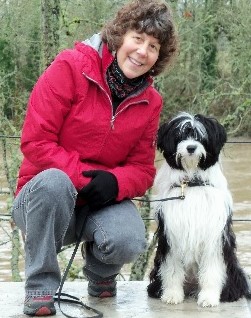
Julie Flanery
Faculty
Julie Flanery (she/her), CPDT-KA has been working professionally with dogs and their handlers since 1993. She focuses on the needs of the dog and helping people form a strong relationship, through clear communication, and positive reinforcement. She has placed Obedience...