NW370 Hide Placement for Powerful Training
Do you struggle with how to set hides? Do you accidentally overface your dog or make the hides too hard? Do you have structure to your training so that you thoughtfully build skills? Have you stagnated in your training?
Course Details
Hide Placement is the answer. Use thoughtful hide placement using air flow considerations to set scent puzzles up for your dog that will allow your dog to progress steadily. Build intentional odor obedience and an understanding of how to truly source a hide. Use Hide Placement to make your training sessions on point and powerful!
Our goal is a motivated dog who understands his job and who can source a hide quickly and accurately!
This class will help you to understand how odor moves... and set hides that challenge and build your dog's skillsets. Ths is a class dedicated to practical odor theory.
New for February 2022: Search Area Analysis! How to evaluate your competitive seach area or virtual walkthrough and how to use thie analysis both in the moment and for future training setups!
You will learn to set hides and to understand why your dog behaved the way that he did!
This class will have a Teacher's Assistant (TA) available in the Facebook study group to help the bronze and silver students! Directions for joining will be in the classroom after you register.
Teaching Approach
Each week you will receive several lectures released at the begining of the week. There will be theory based lectures as well as lectures and assignments on the current topic. Searches may be done at home or out of the home. This class offers extensive written lectures, no verbal lectures, and videos of varying lengths. It is rare that relevant speaking takes place within a video; they are designed to be watched in order to follow the ideas presented in the lecture. Lecture videos may run from 1 to 4 minutes long, with the average between 1-2 minutes. The lectures are designed to help a student understand the purpose of the topic and how its application might vary by dog. Care is taken so that learners who learn by both watching and reading will be successful.
Syllabus
Week 1: Scent Theory
- Interior Air Flow
- Exterior Air Flow
- Vehicle Aerodynamics
- Using a Smoke Pencil (or another device) to understand air flow
- Diffusion: Accessible and Inaccessible Hides
Week 2: Purposeful Hide Setting
- Odor Handling (NEW)
- Materials the Affect Hides and Stability (NEW)
- Setting for Distinct Scent Cones (NEW)
- Confidence building
- What Constitutes a YES?
- Motivation building
Week 3: Common Hide Challenges
- Promoting Detailing
- Pooling Odor
- Chimney or Mushroom Effect
Week 4: Common Hide Challenges Cont
- Effects of Elevation
- Converging Odor Basics
- Playing with Elevation (NEW)
Week 5: Common Hide Challenges Cont
- Playing with Strength of Odor (NEW)
- Playing with Wind Direction (NEW)
- Playing with Geometry (NEW)
Week 6: Search Area Analysis
- Analyzing Competition Search Areas
- Successfully Utilizing Virtual Walkthroughs
- Using Walkthrough Videos to stimulate training setups
Prerequisites & Supplies
Sample Lecture
Let's continue our exploration in Scent Theory by moving outdoors!
Exterior Air Flow is impacted by:
- Wind direction and speed
- Temperature and humidity
- Environmental structure
Wind Direction is probably the most obvious aspect of exterior air flow. It's something that we can check before our search and mid-search. One way we can do this is by using flagging tape. And it comes in every color of the rainbow!

Flagging Tape is lightweight plastic, non-adhesive tape that is used by surveyors. It's also great to hang off of your belt loop while you search in order to check wind direction.
Here's a video from a recent trial where we had substantial wind. Note that I check the wind at the start line. Although we haven't yet talked about wind and structure, I knew based on the search area and the wind direction that there would be substantial swirling... (high wind on the protected side of the building)
The flagging tape will tell you if you are downwind or upwind of the search area. Downwind means that the wind is blowing towards you. Upwind means that the wind is at your back.
NOTE: Wind Direction (and speed!) can change by the second. Wind isn't stable. As you watch your dog work, you should glance down occationally and check direction/speed (Wind Speed is demonstrated by how much the flagging tape is fluttering).
I like to use the free app called Wind Tunnel to do wind simulations...
Here's a video that I made of a simulation to give you an idea as to what wind speed does to turbulence and pressure. Keep in mind that turbulence carries scent! So where you see turbulence and swirling, that's how scent is behaving!
Structure!
Structure plays a HUGE part in air flow in exteriors. Structure is probably the biggest factor in what odor will do. Structure causes turbulence, kind of like a rock in a stream.
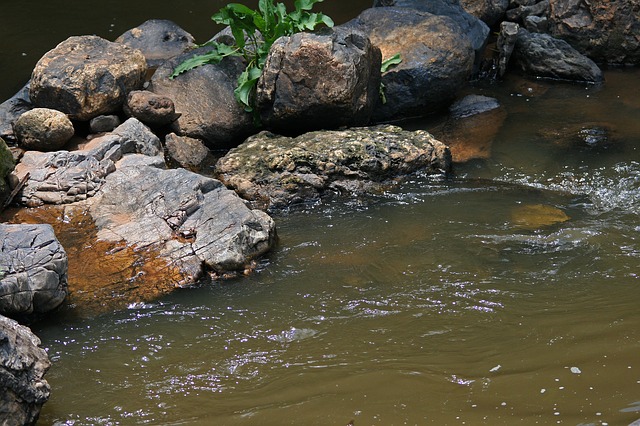
What do you see?
Watching water is one of the most insightful things you can do with regards to understanding scent theory. What does one particle in the water do? How does it travel? Now picture that particle as a scent particle. Even though we like to think of wind as traveling in a straight line, it doesn't! It travels quite like water particles in a stream.
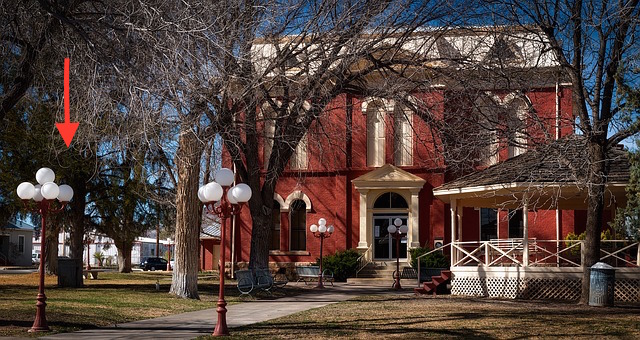
Temperature also plays a factor in what scent will do. We covered this a little in Interiors but the same holds true. Hot air rises, cool air sinks. When you place a hide in a sunny spot, the scent will rise rather than fall.

In the picture above, how will scent behave if you place a hide on the right side of the street? How about the left side?
Humidity is rather interesting... scent stays more localized in high humidity... think fat snowflakes versus tumbleweeds. Fat snowflakes drift and fall rather heavily, fat with moisture. Tumbleweeds are dry and blow easily.
Versus...

HOMEWORK:
Part A:
I took a short video of a Wind Tunnel simulation... I want YOU to tell me what is going on when wind speed changes.
Part B:
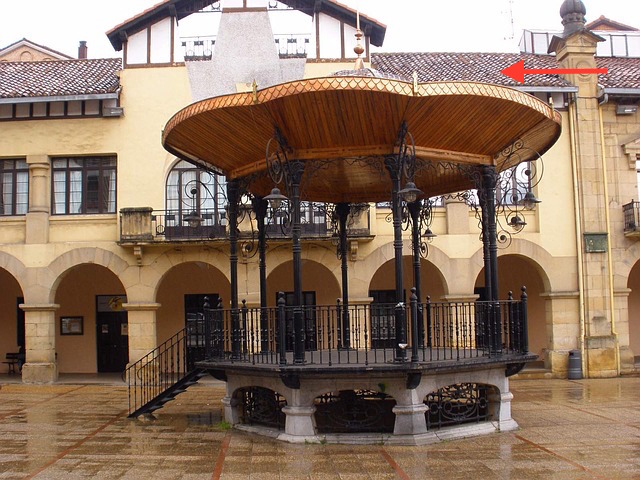
For each of these search areas, what do you think air flow is going to look like? Wind direction is noted by the arrows.
Area 1: Courthouse, light wind
Area 2: Pavillion, after a light rain, light wind
Part C:
Video a search AREA (not an actual search) and narrate a description of the scenting conditions!
Instructor
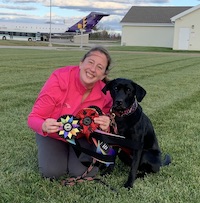
Stacy Barnett
Faculty
Stacy Barnett is both a sport and working dog handler. She is a top nosework competitor and trainer, and the first handler to put multiple Summit titles (16 so far) on 3 dogs (Judd SMTx3, Brava SMTx7, Powder SMTx6) in the National Association of Canine Scent Work (NACSW)...
Registration
Gold
$260
Available seats: 12
- Access to all lectures and homework forums discussion
- Read all posted questions and answers
- Watch all posted videos
- Post general questions to discussion forum
- Submit written assignments
- Post dog specific questions
- Post videos (unlimited)
- Receive instructor feedback
Silver
$130
Available seats: 25
- Access to all lectures and homework forums discussion
- Read all posted questions and answers
- Watch all posted videos
- Post general questions to discussion forum
- Post dog specific questions (video only)
- Post videos (up to 2)
- Receive instructor feedback
Bronze
$65
Available seats: Unlimited
- Access to all lectures and homework forums discussion
- Read all posted questions and answers
- Watch all posted videos