N101S NW101 - Introduction to Nosework
Nosework is easily the hottest new sport around, and it’s easy to see why! It’s fun for humans, dogs love to participate, and it’s good for building confidence and focus in dogs that have issues like shyness, reactivity, aggression, or a simple lack of confidence. Any dog can participate; from puppies to very old or retired dogs. In a matter of weeks, you’ll see your dog confidently ignoring distractions and focusing on the target scent; and by the end of the course, many of the dogs will be ready to compete for their ORT.
Course Details
This course is unique in that your dog will NOT pair food with odor in order to teach odor; instead, we use the proven training method that produces the nation's top drug and bomb detection dogs! Our backchaining method is effective on almost all dogs, from insecure and unfocused dogs to highly driven and intense workers. The proof is in the pudding; dogs going through only one or two levels of our courses are earning their ORT and NW titles in record time! Even if your dog has failed using other methods, we can help you succeed!
In this class, you will learn about the basic concepts in searching for odor, proper use of equipment, how to handle odor, how to make and place hides, and how to teach your dog the importance of odor obedience. You will also learn how to make the search for scent extremely important to your dog.
Teaching Approach
Lectures will be released weekly. In addition to exercises, there will be lectures on key concepts. There will be no homework assigned on the concept lectures such as lectures on Scent Theory, reading the dog, and handling. Lectures with exercises will include a written portion, example videos, and homework. The exercises will build on each other over the duration of the course, and most can be done in small spaces. There may be some bending required, however no quick movements are necessary. If you have questions as to how this can apply to your situation, please reach out to me via the instructor link.
This class will have a Teacher's Assistant (TA) available in the Study Group. TA's are available to answer questions and review videos for Bronze and Silver (minus the Silver video allotment with your instructor).
The instructors for this class change every session, please check the Schedule page for this session's instructor. This session is taught by Stacy Barnett.
Syllabus
Week 1:
- What is Nosework?
- Handling and preparing odor
- The two halves of Nosework training
- Hunting games for low confidence dogs using food (optional)
- Using and Conditioning Markers
- Initial odor imprinting
- Introducing the Switch Box
Week 2:
- Building Duration and Value for Odor
- Moving the Switch Box to the Floor
- Introduction to Hunting Games
- Expanding on Hunting Games
- Developing your Start Line Routine
- Introduction to Handling and Body Language
Week 3:
- Adding Searching Challenges: Push in and Go Between
- Introduction to Interiors
- Transition to Easy Interiors
- Gear and Line Handling
Week 4:
- Introduction to Aging
- Introduction to Hides under Chairs
- Adding Searching Challenges: Thresholds & Corners
- Searching a New Interior
- Searching on a New Surface
Week 5:
- Intro to Blowing Odor using Switch Boxes
- Setting Hides at Different Heights
- Searching Amongst Basic Distractions
- Adding Cold Containers to the Search Area
- Selection Games
Week 6:
- Switch Box Container Games
- Developing Container Skills
- Introduction to Cardboard Boxes
- ORT Prep
- Next Steps and Stuff to do Between Terms
Prerequisites & Supplies
Sample Lecture
In this lecture we will get started with our odor imprinting!
We can do this in two steps. If your dog is very naturally operant, you can skip to Step 2. If you have trouble though with Step 2, go back to Step 1!
Step 1:
All we are going to do in this step is start to associate odor with food.
You will want to find something like a cookie tin lid or metal pie plate. If you purchased your supplies from a Nosework vendor, you'll find that most of the tins come with magnets. These come in quite handy because they stick to the middle of the cookie tin lid! (Some people use metal strainers for this purpose. I tried a strainer with Powder, however it created some foot targeting behavior. For her, the cookie tin lid was much more effective!)
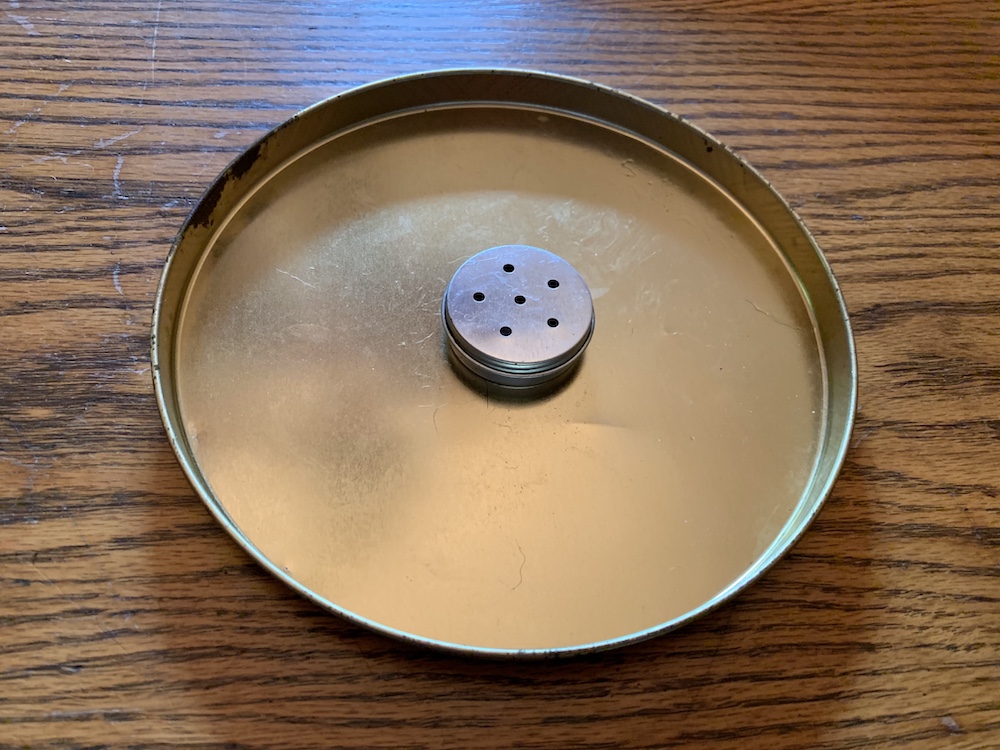
To get your dog's interest in the lid, you can pre-load it with a couple of tasty cookies. Place it on the ground. Your dog will investigate and eat the cookies. At that point, mark with a "Yes" and then add cookies to the plate. This will also help build duration later on!
Once your dog has eaten all of the cookie, pause... your dog will put his nose back towards the lid to investigate. Mark with a "Yes" and then reward on the plate. This is the start of your indication. You'll see in this video how I wait for Powder to lower her head to the tin BEFORE I reward. That's essential. It establishes a cause and effect relationship. At this point, your dog is already learning that odor pays off!
Step 2A:
In this step we are going to switch to our metal switch boxes. These switch boxes come in handy if you ever need to fix a box smashing behavior later on. I use the metal boxes in part over plastic tupperware because it prevents scattering. Some dogs are reinforced by the scattering behavior which can increase destructive container behavior down the road. It's super important to use heavy type, unbreakable, Game Boxes, especially with your larger or more physical dog.
We are going to start by shaping the dog placing his nose in the hole.
This is going to be relatively easy if you did Step 1, because we are going to place our odor in the box before we work. It's super important to not try to shape a nose in the hole behavior without odor, because we don't want to reinforce the dog for indicating where there is no odor.
Before we discuss how to do this, let's talk a little bit about how we need to reward our dogs.
It's incredibly important to "REWARD AT SOURCE" . This means that you will reward as close to the box as possible without actually putting food in the box. It can be easiest to feed out of a cupped hand in order to avoid dropping food in the box. If you drop food in your box, your dog will focus on eating out of the box (which is tough!) and you will have a hard time developing a alert behavior. Plus, your box will smell like food which your dog may focus on rather than the odor itself.
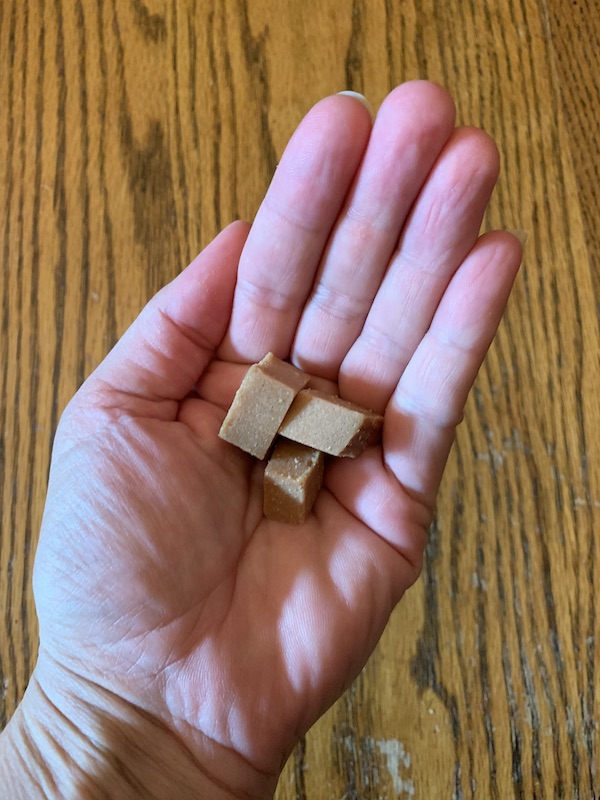
Feeding away from source moves the dog towards the handler when they are uncertain. So the dog ends up orienting to the handler… which can result in a couple of things down the road:
- The alert may be so brief that the dog comes back to the handler, but the handler doesn’t know where the alert actually occurred.
- Lessening of duration at source
- The dog may increase focus on the handler when confused which can easily be misunderstood as an alert. Handler may call Alert and get a No.
- You will start to see a decrease in the precision over time.
Place your odor tin into the switch box (or use your chosen Game Box). You will probably want to mark which box you use for odor. I put a small "H" on my hot box.
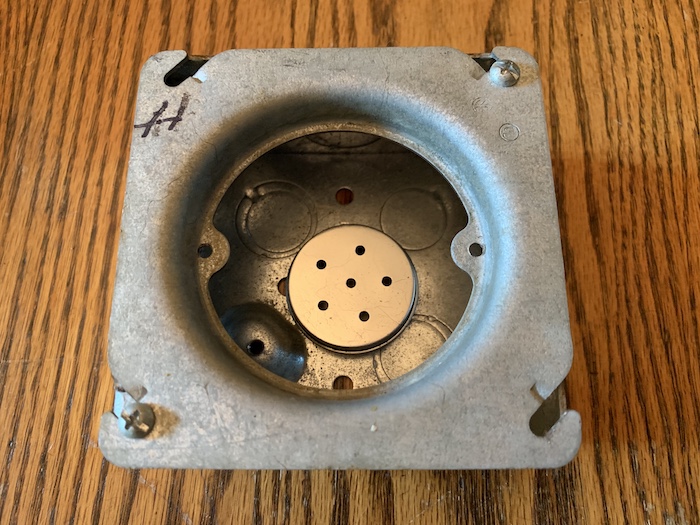
It can be helpful to do this step while sitting on a stool. If you sit on the floor with your dog, you'll find that the dog starts to orient more towards you and your treats which can affect the nose in the hole behavior.
Hold the switch box in one hand and offer your dog the box. You dog will sniff it out of curiosity. Mark with a "Yes" and feed with a cupped hand over the hole being careful not to drop treats (it can be helpful to use non-crumbly treats for this!). Repeat a few times. Your dog will start to offer more and more of a nose in the hole behavior. Mark and reward, shaping your dog to stick his nose in the hole of the box. (Remember that the raised circular part of the ring needs to point DOWN, otherwise it may be aversive to your dog.)
If your dog offers a paw, simply lift the box out of reach and re-present it so that he learns that the behavior needs to be nose-only.
Step 2B:
Now let's move the box to the floor! You'll find this step easier after having done it while holding it in your hand. Again, mark and reward for nose in the hole behavior.
Some dogs may get a little "footsy" with the box. See if the behavior will self correct by not rewarding it. If the foot continue instead of being very rare, go back to Step 2A. It's SO important that your dog learns that alerting should not occur with the feet. A long time ago at the beginning of Nosework, pawing was actually encouraged! Things have changed over the last decade and there is a huge sensitivity to destructive alerts. Remember that one day you will be searching a vehicle! You certainly don't want to worry about scratching someone's car... In competition, destructive type behavior that includes excessive pawing can easily earn you a Fault. You can still title, but it will put you at the bottom of placements. Learning how to properly indicate on odor at the BEGINNING is the best way to avoid having to use my Box Smashing Anonymous Self Study course later!
So go ahead and try these games and let's see how you do!!
Instructor
Stacy Barnett
Faculty
Stacy Barnett is both a sport and working dog handler. She is a top nosework competitor and trainer, and the first handler to put multiple Summit titles (16 so far) on 3 dogs (Judd SMTx3, Brava SMTx7, Powder SMTx6) in the National Association of Canine Scent Work (NACSW)...
Registration
Gold
$260
Available seats: 12
- Access to all lectures and homework forums discussion
- Read all posted questions and answers
- Watch all posted videos
- Post general questions to discussion forum
- Submit written assignments
- Post dog specific questions
- Post videos (unlimited)
- Receive instructor feedback
Silver
$130
Available seats: 25
- Access to all lectures and homework forums discussion
- Read all posted questions and answers
- Watch all posted videos
- Post general questions to discussion forum
- Post dog specific questions (video only)
- Post videos (up to 2)
- Receive instructor feedback
Bronze
$65
Available seats: Unlimited
- Access to all lectures and homework forums discussion
- Read all posted questions and answers
- Watch all posted videos