FF155 Go Ahead, Motivate Me! Engagement for the Differently Motivated Dog
This class has been created for handlers working with dogs who do not fit the traditional picture of a “work-oriented” dog. These are dogs who tend to be naturally independent, environmentally focused, or seemingly uninterested in training for its own sake, and who often struggle to maintain engagement using common reinforcement strategies such as toys or high-energy play.
Course Details
Some of us really enjoy training and competing, but our dogs came to us for reasons other than sport potential. Some were chosen because they are easy to live with and have lower day-to-day needs (in terms of physical exercise and/or high-level mental stimulation). Some joined our lives through rescue or rehoming. Sometimes we are passionate about a breed, but that breed has not been selectively bred for handler-directed work. Others, despite having a pedigree that suggests “they should love training,” simply do not display the innate drive or enthusiasm we expected.
When working with these dogs, it can feel confusing or discouraging to apply familiar training strategies and see little improvement. Progress may be slow or inconsistent. Enthusiasm may drop quickly within training sessions. Engagement can be fragile.
Comparisons with highly driven sport dogs, whether they are at our in-person classes or in the flood of social media reels and clips we see each day, often leave us wondering what we are doing wrong, or whether our dog is even capable of enjoying training at all.
The goal of this class is not to turn our less “work-oriented” dog into something they are not. Instead, we focus on building genuine engagement, motivation, perseverance, resilience, and handler focus using approaches that are specifically effective for dogs who are not innately handler-focused or work or toy-obsessed. We look at how to create training that feels worthwhile to our dog, how to support persistence and emotional regulation, and how to develop reliable work even as we start to “reduce reinforcement” (i.e. when the food or toys are no longer immediately available).
As the class progresses, teams will learn practical strategies that lead to more successful and more enjoyable training sessions (for both our dog and ourselves), as well as improved performance and consistency in real-world and trial environments. These skills are developed gradually, with an emphasis on clarity, nurturing cooperation, adding fun, and acknowledging our dog’s emotional experience of work.
This class may be a good fit if your dog:
- Is not innately driven to train or “work”.
- Is naturally independent or environmentally focused.
- Appears unenthusiastic about formal training.
- Loses interest quickly during sessions.
- Struggles to persist when tasks become challenging.
- Rarely works with speed or intensity.
- Is easily distracted by “anything” (e.g. sights, sounds, smells).
- Performs significantly worse when food or toys are not available.
This class is suitable for anyone interested in developing a stronger relationship with their dog, whether training purely for enjoyment or with competition goals in mind.
Gold and Silver spots will likely include teams with an interest in obedience, rally, tricks, musical freestyle, nosework, agility, and other sports. Teams who are not planning to compete but simply want training to feel clearer and more rewarding for both themselves, and their dog, are also very welcome.
Interested in learning more about this class, check out this free podcast - https://www.fenzidogsportsacademy.com/blog/e444-sharon-carroll-talking-about-differently-motivated-dogs
Teaching Approach
Note: There is a teaching assistant (TA) for this class. This means that all bronze students will be able to access individual feedback on all of their videos from our wonderful TA, Jennie Murphy. To access this feedback please join the private FB group after registering for this class.
Lectures will be released in two blocks each week: one at the start of the week and one mid-week. There will be practical exercises introduced weekly, with lots of flexibility for Gold level students to progress through the work at their own pace, selecting the exercises that most suit their dog and their own end goals.
All students are encouraged to follow along with the Gold and Silver students’ forums to get the most benefit from this class. This is where you will see the strategies applied in a real-life setting, with appropriate adjustments made as required to suit the needs of each individual dog and handler.
The content of this class is presented in written form, with the occasional diagram or chart to support the written information. Practical exercises are often supported with short video demonstrations. The videos may include audio voice-over but are always supported with a detailed written description.
Sharon’s approach is very practical and flexible. Her aim when teaching is to help students understand why their dog is performing the current behavioral responses and how, through changing our approach to training, we can increase our dog's enjoyment, enthusiasm, and desire to train. Students typically say that their increased understanding of the existing behaviors significantly improves their relationship with their dog and reduces their own feelings of frustration.
Syllabus
Written topics are released in two batches each week, one at the start of the week and one mid‑week. Each week builds systematically on the previous week, moving from foundational concepts around engagement, arousal, and communication, through to motivation, environmental challenges, confidence, and finally sustained work and competition preparation.
Week 1 – Engagement, cooperation, and communication.
This week lays the conceptual foundation for the entire class. We explore engagement as a choice and as an independent, reinforceable behavior. We examine how communication, cooperation, and clarity influence our dog’s willingness to participate. We also discuss opting‑in and opting‑out behaviors and explore common challenges, such as treat rejection, through a diagnostic lens.
Lecture topics include:
- About engagement
- Factors that contribute to enthusiastic engagement
- Cooperation
- The relationship between drive and rules
- Rejecting treats, toys, and play
- Communication
- Opt‑in behaviors and opt‑out behaviors
- Work time, break time, off time
- The importance of enrichment
- Compromising and setting fair expectations
Week 2 – Reinforcement and building reliable work.
Week 2 focuses on the mechanics of learning. We take a detailed look at operant conditioning, reinforcement versus rewards, markers, reinforcement schedules, and how behaviors are established and maintained. The emphasis is on building reliability and clarity so that behaviors remain strong even when visible rewards are reduced or absent.
Lecture topics include:
- Adding work
- Operant conditioning
- Markers and reward events
- Reinforcement schedules
- Establishing a new behavior
- Rewards versus reinforcement
- Reducing reinforcement
- Ending an exercise or sequence
Week 3 – Motivation and competing drivers.
This week examines motivation in depth and its relationship to reinforcement. We explore intrinsic versus extrinsic motivation, how different behaviors are maintained, and how to adapt training strategies when motivation is fragile, situational, or easily displaced. We also discuss strategies for maintaining enthusiastic engagement, even when the rewards are left behind.
Lecture topics include:
- Extrinsic motivation / Intrinsic motivation.
- The relationship between reinforcement and motivation.
- The importance of prioritizing motivation.
- Building motivation with our DM dogs.
- “Stop” versus “go”
- Speed
- Competing motivators
- Leaving rewards behind
Week 4 – The environment, and engagement under distraction.
Week 4 shifts the focus outward to the environment. We examine how environmental salience competes with work. This week introduces structured strategies for acclimation, information gathering, and state regulation, allowing dogs to notice their environment then shift to dismissing / ignoring stimuli in the area, so as to remain engaged with the task at hand.
Lecture topics include:
- The environment
- The interplay between work and the environment
- Acclimation
- Habituation, perception, and context
- Labeling the challenge level of the environment
Week 5 – Confidence, clarity, and reducing perceived effort.
In Week 5 we explore the relationship between confidence, clarity, and motivation. We look at how confusion, miscommunications, and information processing affect performance, and why behaviors perceived as low effort are more likely to be offered enthusiastically. This week focuses on building understanding, reducing negative emotional responses, and supporting confident interaction with challenges such as spatial pressure and novel objects.
Lecture topics include:
- The relationship between confidence and motivation
- Confusion and errors
- Errors of anticipation
- Repetition
- Hesitation due to information processing
- Understanding and clarity
Week 6 – Mental stamina, readiness, and putting it all together
The final week targets sustained engagement and real‑world application. We focus on building mental stamina, preparing our dogs for longer periods of focused work, and systematically responding to lapses in engagement. This week also covers readiness to work, increasing formality, and key considerations for those preparing for competition.
Lecture topics include:
- Mental stamina
- Planning towards competing without treats or toys
- Key points about rewards
- A systematic guide for responding to lack of handler focus
- Start routines, end routines, arousal governors
- Formality
- Considerations when competing
Prerequisites & Supplies
Sample Lecture
1.8. Work time, Break time, Off-duty time.
(Approx. reading time: 6 mins)
It is critically important that our dogs are able to differentiate between:
- Times when engagement is required (and will be reinforced), and
- Times when engagement is not required (and will not be reinforced).
When living and/or working with work‑oriented dogs, this distinction is crucial because, in the absence of clarity, those dogs may continually attempt to solicit work, attention, or rewards, even at times when our goal is for them to disengage from us and “switch off”.
Conversely, when living and/or working with differently motivated (DM) dogs, the absence of clarity around when to remain engaged and when to disengage tends to produce the opposite problem. DM dogs are far more likely to develop a habit of disengaging even during sections of work, when our goal is for them to remain engaged.
The reason for these differing responses is that, in the face of ambiguity, work‑oriented dogs tend to default to engagement, while DM dogs tend to default to disengaging, exploring the environment, wandering off sniffing, and pursuing independent activities. For this reason, one of the most important foundations for building reliable engagement with our DM dog is helping them clearly understand when they are working and when they are not working.
This clarity supports two critical outcomes:
- Our dog is able to be enthusiastically engaged during periods of work, because engagement is consistently acknowledged and reinforced.
- Our dog is able to relax, disengage, and shift attention away from us when not working, because they have been clearly told that engagement is not required at that time.
For DM dogs in particular, ambiguity around this boundary is one of the most common contributors to fragile engagement, early disengagement, and declining motivation across sessions.
Why ambiguity is so costly.
In early training sessions, when we end a session or pause an interaction without clearly communicating that change to our dog, our dog will typically continue to attempt engagement briefly. From their perspective this is logical, they believe the game or session is still active.
At that point, however, we have already disengaged. Our dog’s attempts at engagement go unacknowledged or unrewarded. Over repeated experiences, this erodes motivation to engage with us in future sessions, and can also lead to our dog independently switching between engagement and disengagement even within sections of work.
Every time our dog disengages from us without being cued to do so, learning occurs.
If we place our DM dog in ambiguous situations where we disengage our attention from them and shift focus elsewhere, for example to answer our phone, chat to an instructor, or move equipment, without letting our dog know they are free to disengage at that time, one of two outcomes is likely to occur:
- Our dog continues attempting engagement briefly, receives no meaningful feedback, and finds the experience unrewarding or even unpleasant. This reduces future motivation to initiate or sustain engagement.
- Our dog decides, in the absence of information from us, to disengage (e.g. visually scan the environment, sniff the ground, wander away, or interact with other stimuli). These behaviors are enjoyable, so the behavior of disengaging is reinforced. Each repetition of disengaging without a cue, strengthens disengagement as a default response.
Over time, this creates a habitual pattern that is not beneficial in training or sport contexts. Our dog may no longer differentiate between:
- Us pausing mid‑session to chat to a friend or instructor, where disengagement has been repeatedly allowed to be rehearsed, and
- Us pausing at a start peg, start line, or during a judge interaction, where disengagement is undesirable from our perspective but occurs due to prior learning (i.e. our dog has a learning / reinforcement history that tells he/she that disengagement is the correct choice at that time.)
Clear communication prevents this confusion. At any given moment, we need to know whether our goal is engagement or disengagement, and we need to ensure that our dog also knows.
Three distinct states our dog needs to understand.
To support both engagement and relaxation, our dog needs clarity around three different states.
1. Working.
During working time:
- Engagement is expected.
- Engagement will be acknowledged and reinforced.
- We remain actively involved with our dog.
If we need to pause briefly while remaining in this state, we continue to meet our dog’s expectations by either reinforcing engagement directly, or by cueing a durational behaviour and reinforcing it at an appropriate rate.
2. Taking a mental break (i.e. a temporary pause from focused work).
Sometimes we are not ending the session, we are simply ending that section of work. This may be to give our dog a brief mental break before setting up the next exercise, or because we need to answer our phone, speak briefly with an instructor, or move props or equipment.
A break cue communicates:
- Precision and intensity are not required right now.
- Engagement may soften, but our dog should remain loosely connected and available.
- Another section of work is likely to follow.
Having periods of less intense focus / engagement requirements within sessions is especially important for DM dogs, who may find sustained handler focus mentally draining and benefit from opportunities to mentally reset between sections of work.
When we need to pause briefly without ending the session, clarity remains essential. The most appropriate strategy will depend on the environment, the length of the pause, what activity will follow, our dog’s innate traits, and their current level of training. Options include:
- Cueing “take a break,” allowing our dog to move loosely in the area until we cue engagement again.
- Placing our dog on a station or in a stay and intermittently reinforcing that behaviour at a rate that prevents frustration.
- Continuing to reinforce engagement by delivering treats at a rate that keeps our dog nearby until work resumes.
- Providing sustained social contact for dogs that value it, such as kneeling down and offering physical interaction while we speak briefly to an instructor.
What matters is that we don’t simply disengage ourselves from the interaction without providing our dog with information about what we want in terms of level of engagement.
3. Off‑Duty (i.e. the session has ended).
Ending a session requires a clear cue that tells our dog:
- Engagement is no longer required.
- Engagement will not be reinforced at this time.
- They are free to disengage fully and shift to independent behaviour.
This clarity directly supports stronger engagement in future sessions.
Common end‑of‑session strategies include:
- A verbal “all done” cue followed by leaving the area.
- A verbal “all done” cue followed by a treat scatter, snuffle mat, or long‑lasting chew.
- A conditioned “go be a dog” cue that releases our dog directly back to environmental exploration.
These strategies actively promote the behavior of disconnecting from us, which is exactly what we want at that time.
Why this matters for developing and maintaining engagement.
Providing clear cues that define when work begins, pauses, and ends protects engagement in two key ways:
- It prevents attempts at engagement that go unrewarded, which erodes motivation.
- It prevents uncued disengagement, which builds habits that conflict with training goals.
Clear communication allows our dog to be fully in the game when the game is on, and genuinely relaxed when it is not. For our DM dog, this clarity is not a minor detail. It is one of the key pillars that supports sustained, willing engagement over time.
Instructor
Sharon Carroll
Faculty
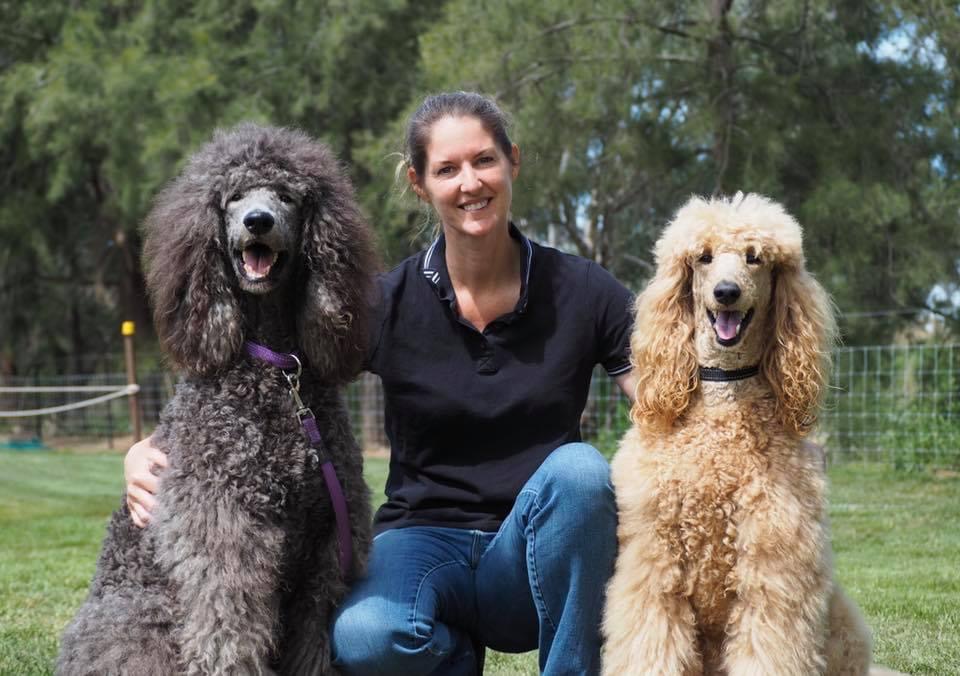
Sharon (she/her) has been a professional animal trainer for 30 years. She has been both a presenter and trainer in a range of animal shows, and currently operates, a dog training and behaviour consulting business based in Newcastle, Australia. (Click here for full bio and to view Sharon's upcoming courses.)...