FE295 Infinite Possibilities - Think your way to success with Clarity
Course trailer
Course Details
Adore your dog? Find dog sports fill a gap in your life but you know you can get more out of them? Want to keep improving your mental game? Building your mental toolbox? Delving into planning and goal-setting in more detail? Looking at specific classes in your library and want to move into action? Want to work out a plan to maximize your success at a major event? Struggle with difficult people? If so, Infinite Possibilities is the course for you.
Finding motivation, dealing with ring nerves, coping with stress and changing plans, working with the animal you have not the one you wanted are all examples of the kinds of possibilities you may want to work on, but the list is truly endless. Perhaps you want to challenge your ability to remember courses, learn more about the workings of the brain, or process grief for a lost companion. It really is your choice how you use your thread and this class.
Students will have a safe, small, private, and supportive place to break down issues and work on their mental game. A significant part of the process will be building up, and using, individuals’ mental “ toolboxes” through discussions and personalized homework. You may use material and issues from other courses or start completely fresh. If an issue outside of dog sports is causing you angst and affecting your training or competing you are welcome to bring it to this class. We've worked on retirement plans, chronic pain, finding a new job and much more in this class.
This course is gold level only and kept small deliberately in order to keep it private and personal. What happens in IP stays in IP!
There will be material posted weekly dealing with both Mindfulness and Emotional well-being, which will provide prompts for students who want a more directed thread with formal general homework but students are welcome to do what they want/need in the course.
Syllabus
The course Infinite Possibilities will weave principles of mindfulness through information about many emotions, as well as revisiting some of the topics introduced in Andrea’s other courses. This course will be adapted to student needs and interests every time it runs.
The list of emotional types of words is long and complex and includes
- Positive thoughts
- Positive and lively
- Caring
- Quiet positive
- Reactive
- Agitation
- Negative thoughts
- Negative and passive
- Negative and forceful
- Negative and out of control
Week One
- Identifying areas of concern
- What is Mindfulness
- Emotions: Agitation and Caring
Week Two
- Where do these issues come from for you?
- Why mindfulness helps
- Emotions: Sorrow, grief, triumph and joy
Week Three
- Planning for success
- Practising Mindfulness in animal training, competing and life
- Emotions: Fear and Hope
Week Four
- Motivation
- Identifying the hard parts of mindfulness for each individual
- Emotions: Anger and Gratitude
Week Five
- When Things Go Wrong – Staying the Course
- Emotions: Frustration, disappointment and satisfaction
- Shame, guilt, jealousy, pride and self-confidence
Week Six
- Moving Forward
- Emotions: Alarm, anxiety, interest and curiosity
Prerequisites & Supplies
Sample Lecture
Getting to the root of whatever.
I’m going to say this right up front – figuring out where issues come from is neither useful nor productive in all circumstances. If the past is not a healthy place to dwell you are never going to find me insisting you go there. The Ostrich Manoeuvre (sticking your head in the sand) has its merit. It is a survival strategy that allows us to move forward.
That said, reflection can be critical to growth and change.
There are (shocking you all not at all) a few different models for reflective practise but the one that I have used clinically is similar to this one and it can be very effective, and telling, to work though.
Gibbs' reflective cycle
Gibb's reflective cycle is a process involving six steps:
- Description - What happened?
- Feelings - What did you think and feel about it?
- Evaluation - What were the positives and negatives?
- Analysis - What sense can you make of it?
- Conclusion - What else could you have done?
- Action Plan - What will you do next time?
For those of you in the June 2015 AIYH course you will know I modelled challenging oneself and using your toolbox by taking Mr. Neurotic (aka Harri) the horse, to a show. Let me model how this reflective practice would work for that event.
Description: The show was nice and quiet by the time we arrived. Harri loaded and travelled well. He was a little “up” when he heard other horses at first but he stayed calm (relatively speaking), He was easy to tack up and while not as perfect to mount as at home was ok there too. Warmup had a few moments of tension but he was able to work through them. The two tests went well, better than I could have hoped honestly. No errors, no unexpected bobbles.
Feelings: I enjoyed the experience (somewhat to my shock) . I wasn’t particularly nervous but was prepared to scratch from the classes at any time. I knew I had to be prepared to adapt from plan A to plan B and in fact ended up doing a plan C for one test. My overarching feeling was one of adventure.
Evaluation: For what it was, a test of a moment in time and a challenge, it was a great day. Would I have been happier with better scores and if I have been able to stick to plan A? Probably, but I was pleased with so much. Mr N’s first show with me, my first time trailering alone in my life. Compliments from spectators, Dealing with a "coven" comment with a laugh not defensiveness. I need a new jacket before I show again – or to try to repair mine.
Analysis: Mr N is ready to slowly add some stress back into his program to learn to cope. I can expect more from him and offer him more concrete support. He can deal with challenges now and the trust we share is quite palpable.
Conclusion: Positive experience for us both. What a long way he has come.
Action Plan: get off property when I can and repeat the show experience at the end of August. (Lots more detail obviously needed – but somehow I suspect planning with be an ongoing topic!)
Being reflective gives us a way to move forward. If there is something you are struggling to let go, or make sense of try some reflection around it. (I can help – just ask!) Reflection can be done on paper all at once or just niggled away at. Both are effective. The goal of reflection is not to cause yourself stress so if all you can think of is “I BLEW IT” don’t get too reflective yet. Start identifying the positive and then allow a little reflection to begin.
The Connection to Mindfulness
Reflective practice is a corner stone of mindfulness. It can calm your mind to lead you to meditation. It is an action of awareness that is central to mindful practice. It can be used in the place of meditation if meditation is not possible for you at a given moment in time.
These questions are about career but you are all smart enough to adapt them to what you need. (http://mindfuluniverse.com/profiles/blogs/10-questions-for-inner-reflection-to-move-with-ease-in-your-caree in case you want to cut and paste)
No shock here - if you want homework assigned - take something from the past (yes yesterday counts) and apply reflective practice in whatever format you would like to it. Do you practice positive reflection now? Should you? Is it a skill you need to build? Add to your toolbox? Why or why not?
Instructor
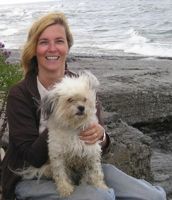
Andrea Harrison
Guest Instructor
Andrea Harrison (she/her) is passionate about all species, including dogs and humans! Having lived with dogs her whole life, Andrea was an early convert to positive training for people and dogs. She has taken this message to the media many times...