AG205 Creating Confident Commitment
Commitment in agility is one of the building blocks of a great team. A higher level of commitment from your dog allows you to trust them to do their job and you can better help them to understand their next line. Over time this increases confidence for both the dog and the handler.
Course Details
Often times people wait, thinking commitment comes with experience. While it can come from experience, the good news is we can work commitment into our training right from start. And I think we should! Failing to do so leaves us unable to give information in a timely fashion and often times, this can cause a chain reaction. We become inconsistent with our timing and our cues, then our dogs start to question us, and they lose confidence in the information they are receiving, decreasing their commitment to obstacles. Commitment, for me is a foundation skill, it is one of the core skills I want to start cultivating right from the start.
During this class we are going to really dive in: exploring what commitment is, when it is happening, where it happening, why we want it, and how we can improve it! We will look at how different factors effect commitment and how we can use them to our advantage. We will look at how to help specific teams because not every team needs the same thing: we are all different and we will all require subtle differences to achieve our desired results.
Commitment is a two way street and requires work at both ends of the leash. We will be working through both handler skills and dog skills that we will combine together into a winning combination for commitment!
This class will be beneficial for both new and experienced dog-handler teams. If you are a more experienced team, the key to moving forward is often going back. Making sure all those foundations you laid are solid. And that is exactly the approach we are going to take here, we are going to step back, make sure our foundations for the road ahead are clear and consistent, and then we are going to move forward, keeping that clarity and consistency in mind! Or, if you are a new team and just getting started in agility, that’s great, we can work towards laying solid foundations right from the start.
Teaching Approach
Lectures will be released on Sunday and Wednesday of each week. You are encouraged to work through all the lectures. Working through all of the steps - even the ones you already feel confident with - will help to increase your clarity and consistency and that helps us with commitment! Lectures will be a combination or written and videos.
Feedback will be written and some voice over video. In some cases I find the voice over video helpful as it allows me to talk with you in real time, slow down, rewind and stop video to help you see and understand.
This class will have a Teacher's Assistant (TA) available in the study group to help the Bronze and Silver students!
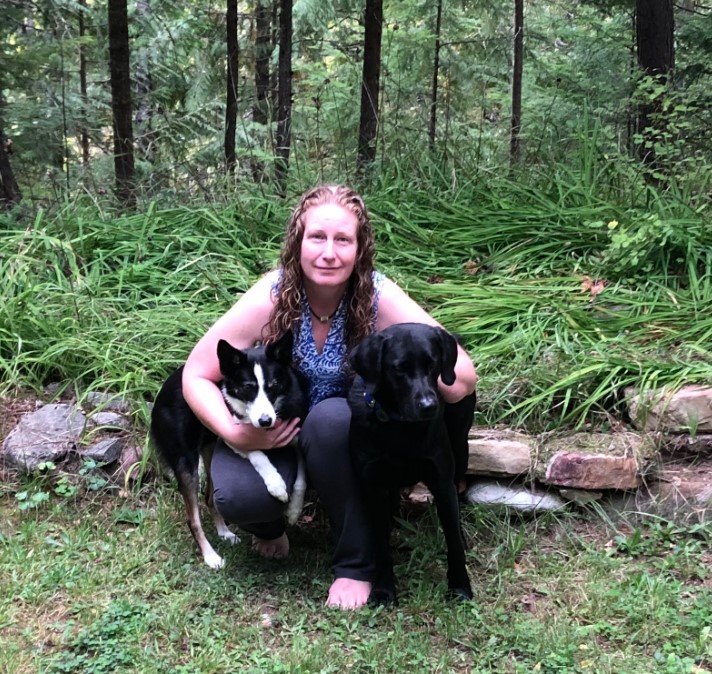 Guest Instructor: Laurie Huston
Syllabus
Week One
- What is Commitment? Why do we want it?
- The role that clarity, consistency and connection play in commitment.
- Reviewing foundations with a focus on clarity and consistency, exercises for both the human and dog end of the leash.
- Introducing the concept of the clock.
Week Two
- Dog’s line
- Adding in cues with clarity and consistency.
- Handling and cuing lines vs obstacles
- Looking at the roles of motion and position.
- Testing commitment with changes in position.
- More motion or less motion, what does your dog need.
- When to reward on the line vs when to reward from the handler.
Week Three
- Adding a bit of distance.
- When and how to move, giving your dog more information
- Adding opposing motion
- Using less motion/more motion.
Week Four
- Increasing distance
- Transferring skills to a jump
- Distraction and variety
- Adding handling
Week 5
- Beginning to add sequencing
- The role of connection in relation to commitment
- Back chaining to increase clarity
- Using reward placement to help keep you moving
- Introducing commitment to other obstacles
Week 6
- Increasing the duration of sequences
- Increasing the difficulty of sequences
- Commitment in relation to non turning obstacles
Prerequisites & Supplies
Sample Lecture
Factors Affecting Commitment
There are several important factors that impact commitment, and these are areas we want to focus our attention on as we work toward building the confident commitment we’re after. One of the biggest contributors to a lack of commitment is a lack of confidence, our dogs simply aren’t clear on what we’re asking of them.
In this class, we’re going to use clarity, consistency, and connection to help build understanding and confidence. These are all areas where you play a HUGE role! I’m a big believer in splitting behaviours, not just for your dog, but for you as well. Many of the concepts we explore will begin with human-only exercises so you can practice and develop your skills. Then, we will layer your dogs back into the picture.
Now, let’s dive into the concepts of clarity, consistency, and connection.
Clarity
A lack of clarity leaves our dogs unsure and can quickly erode their confidence in us. We want to be clear in our reward strategies, reward mechanics, cue combinations, and timing.
There are two key things we can do as handlers to improve clarity:
- Plan ahead
- Work through exercises without our dogs
Planning ahead allows us to develop a clear mental picture of what we want to achieve, making execution much easier. As much as we love working with our dogs, they can also add a great deal of pressure. They may be fast, and we feel the need to rush to keep up. They may be sensitive to errors, and we feel like we HAVE to get everything right.
Taking the dog out of the picture allows us to focus on our own skills as handlers. We can slow things down and work through each piece of the puzzle, increasing our fluency. The more fluent we are, whether that’s delivering rewards, using clear body language, or executing actions without overthinking, the clearer the picture becomes for our dogs.
Ask yourself: Are my pictures clear to me?
Do I know what reward strategies are available and which ones work best for my team?
Can I execute those strategies with clean mechanics?
Am I clear on my cue combinations and how each handling element fits together?
Do I understand my timing—when to cue and when to reward?
If any of these pieces are unclear to you, it’s likely they are unclear to your dog as well.
Consistency
Consistency is directly tied to clarity. Often, when we lack clarity, we also lack consistency. Some of our exercises will help define exactly what we’re responsible for and how we can execute more consistently.
If we can perform a skill the same way every time, that consistency creates clarity. It makes it easier for our dogs to follow along, because they are experts at noticing small details. When we’re consistent, our dogs can recognize patterns and confidently predict what comes next.
We want to improve consistency in our reward strategies, reward mechanics, cue combinations, and timing. And yes... you likely guessed it, this means more human-focused exercises before we bring the dog back in.
Ask yourself:
Am I consistent?
Do I use my reward strategies clearly and the same way each time?
Are my reward mechanics consistent?
Are my cue combinations consistent?
Is my timing consistent?
Connection
Connection is a big one, and it’s closely linked to both clarity and consistency. When we are clear on our role and can execute consistently, it’s much easier to stay present and connected. When we lack clarity or fluency, it’s easy to become distracted and disconnect and that disconnect can prevent commitment.
Some of you may have heard the phrase: Connect–Commit–Cue. Our dogs are always seeking connection, and most dog will not commit until they have connection from their handler. Think about how often you’ve seen a dog finish an obstacle and immediately move toward the handler, they’re looking for connection. Meanwhile, we are often focused ahead on the “next” thing.
Instead, when we follow connect–commit–cue, we connect as the dog finishes an obstacle and maintain that connection through the commit and cue phases. That connection helps the dog stay on their path rather than drifting toward us.
So what does connection look like in agility? It’s not about staring deeply into your dog’s eyes. Between obstacles, connection is your dog seeing the side profile of your face.
Different dogs require different levels of connection. Younger dogs or those lacking confidence may need to see more of your face than a more experienced dog. As we go through this class, we will be looking at each team individually to determine what level of connection works best.
Connection supports dogs in staying on their line and finding the next obstacle more efficiently.
Ask yourself:
Do I always know where my dog is on course?
Do I stay mentally present?
Do I know where reconnection points are when handling or equipment breaks connection?
Do I focus on reconnecting as my dog completes an obstacle?
If you answered “no” to any of these questions, don’t worry, we’re going to break everything down and work through it together. If you answered “yes” to many of them, you’re already well on your way to building a strong, confident team. From there, we can focus on refining and improving what you’re already doing.
Instructor
Laurie Huston
Faculty
Laurie Huston became a certified instructor under the OneMind Dogs system in 2017 but enjoys working with students in whichever handling and training system they’re using ...
Registration
Gold
$260
Available seats: 12
- Access to all lectures and homework forums discussion
- Read all posted questions and answers
- Watch all posted videos
- Post general questions to discussion forum
- Submit written assignments
- Post dog specific questions
- Post videos (unlimited)
- Receive instructor feedback
Silver
$130
Available seats: 25
- Access to all lectures and homework forums discussion
- Read all posted questions and answers
- Watch all posted videos
- Post general questions to discussion forum
- Post dog specific questions (video only)
- Post videos (up to 2)
- Receive instructor feedback
Bronze
$65
Available seats: Unlimited
- Access to all lectures and homework forums discussion
- Read all posted questions and answers
- Watch all posted videos