N101J NW101 - Introduction to Nosework
Nosework is one of the fastest-growing dog sports for good reason — it’s fun, builds confidence, and is suitable for dogs of all ages and temperaments. Nosework is especially helpful for dogs who struggle with reactivity or low confidence. Even in just a few weeks, you’ll see your dog tuning out distractions and focusing on target odor.
Course Details
Strong Foundations. Clear Communication. Odor-Driven Learning.
This course is unique because we start on odor from day one — no food searching. We use a proven backchaining method similar to the one used to train top detection dogs. The approach is effective for everything from sensitive or unfocused dogs to high-drive workers. Many teams earn their ORT and Novice titles after our introductory courses.
You’ll learn core Nosework concepts: how odor moves, how to handle equipment and hides, how to build strong odor obedience, and how to make searching both clear and motivating for your dog
Get a head start by conditioning your dog to odor using the sample lecture below.
Teaching Approach
This class provides written lectures and videos of varying length. Any video lectures that include verbal information/instructions are accompanied with written steps. Lectures are designed to be watched and follow the ideas presented in the lecture. Lecture videos may run from 1 to 4 minutes long, with the average between 1-2 minutes. The lectures are designed to help a student understand the purpose of the exercise and how it might vary by dog. Pre-lectures are available before the class starts so that teams can prepare before we begin. Since most lectures are sequential, there may be weeks were two batches are rolled out each week - the night before each week and a few days into each week. A 1 minute unlimited homework video option is available, along with the standard 6 minutes option per week. This class will work best for students who learn by reading text lectures, watching videos and who like having structured lesson plans.
This class will have a Teacher's Assistant (TA) available in the study group to help the Bronze and Silver students! Directions will be in the classroom after you register.
Syllabus
This class will focus on building value for target odor and reinforcing clear criteria at source. We'll also develop core skills such as hunting, generalization, and odor discrimination - all through fun and engaging games.
Week 1:
- What is Nosework and Training Approach
- Preparing and Handling Odor
- Setup and Mechanics
- Odor Conditioning
- Generalizing: Odor Conditioning Location
- Handling: Food Scatter
- Criteria At Source: Capturing Duration
- Hunting: Intro to Hunt Games
Week 2:
- Handling: Handling Basics
- Handling: Marker Cues & Reward Delivery Mechanics
- Hunting: Container Area Search
- Generalizing: Type of Containers
- Discrimination: Shell game
- Sourcing: Tin Targeting (From Floor to Fridge)
- Concept: Reverse Luring for Duration (Non-odor)
Week 3:
- Hunting: Box Acclimation Part 1 (Non-odor)
- Handling: Search cues and Other cues
- Criteria at Source: Building Duration, Reverse Luring
- Behavior at source (TFR vs RFR) - Lecture
- Hunting: Decoy, Loner and Outta my way
- Discrimination: Novel Odor
- Hunting: Intro to Interiors
Week 4:
- Handling: Gear and Leash Handling
- Handling: Startline and End Routines
- Discrimination: False Alerts
- Hunting: Box Acclimation Part 2
- Discrimination: Assembly Line, LeapFrog, .Matrix, Hi/Low
- Hunting: Hides on Chairs / Tucking Hides
Week 5:
- Criteria: Intro Trial Containers / Addressing Antics
- Generalizing: Introduction to Aging
- Generalizing: Interior in new familiar location
- Generalizing: Containers in novel location
- Criteria: Emotional Regulation with Containers
- Discrimination: Trial Container Acclimation & .Games
Week 6:
- Generalizing: Hide in novel Interior Location
- Discrimination: Intentional Interior.Distractors
- Hunting: Blind Container and Interior Searches
- Hunting: Objectless Search Area
Prerequisites & Supplies
Sample Lecture
From Week 1: Odor Conditioning
We condition our dogs to respond to a target odor by associating it with a primary reinforcer - usually food. The process is simple: we pair the odor with a reward by giving the dog some treats whenever it encounters the odor. There are several effective ways to do this. You can hold out the odor vessel in your hand and feed your dog directly at the source. You can pair the odor with mealtimes so that it becomes associated with something positive. You can even offer your dog a choice between food and the odor, then reward it when it chooses the odor. All of these methods help reinforce the dog’s interest in and focus on the odor.
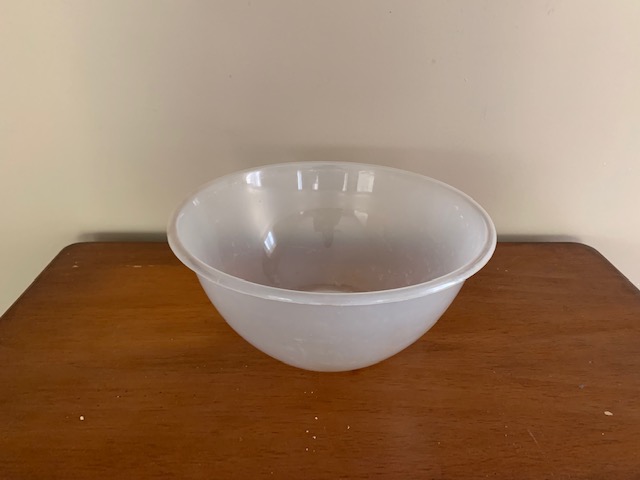
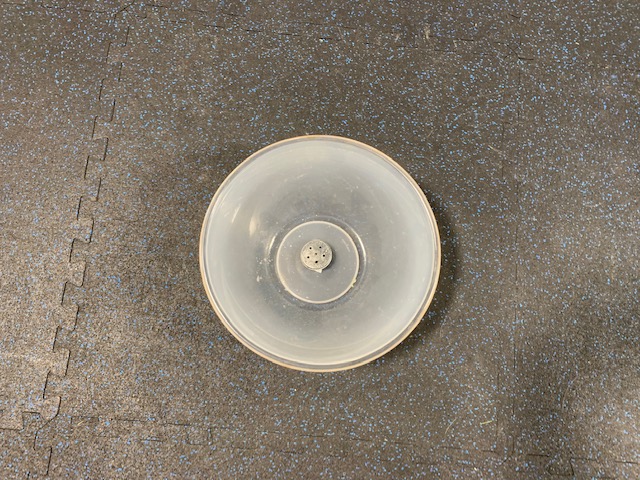
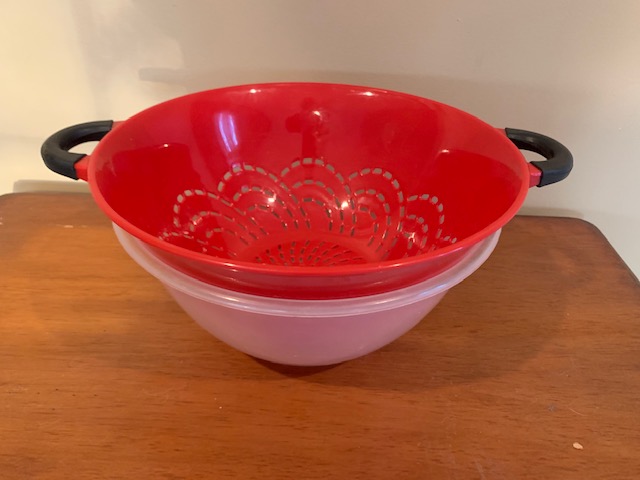
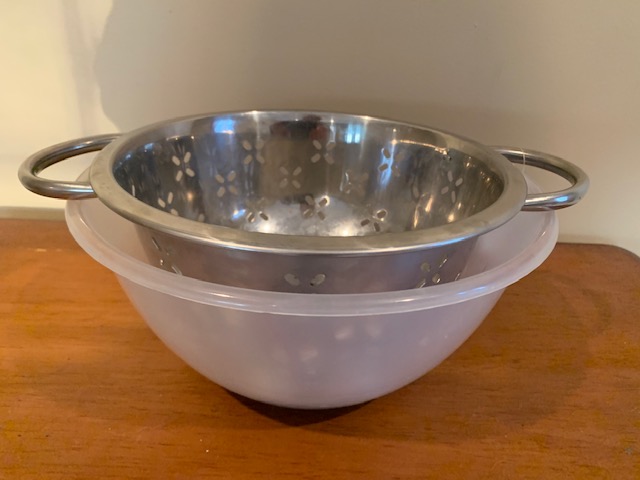
Another method is to put the target odor in a large rim bowl or colander and feed “over odor”.
There are many benefits to this method:
- It keeps the dog’s nose down and their eyes off the handler - especially off the handler’s hands.
- It allows for a steady rhythm, with treats dropping one at a time in a continuous flow.
- It leverages the dog’s anticipation of that predictable rhythm, which can then be used to shape a sustained nose freeze at source.
A sturdy, wide-rimmed bowl works best, as it allows us to keep our hands above the dog’s head while delivering treats. The moment our hands get too involved, dogs start focusing on our "food hands" and quickly learn to watch us instead of working independently. By keeping our hands high, dogs learn to wait for treats to "drop from the sky".
For some dogs using a flat plate or pie pan will work better. Some dogs may worry about pushing into the deep bowl. Whether it's a bowl, colander, or pie plan, they all allow for dropping treats near odor.
When you first start out, you don’t need to mark any behaviour. In fact, we don’t want you to mark anything yet. Just focus on your mechanics of dropping treats directly over the source.
Here is an example of using a bowl with the loaded qtip tin. You can also use a colander, and place it inside a big bowl like this with the hot tin under the colander.
Homework
- Prep before training:
- Select a wide-rimmed colander, bowl or pie pan. From this point forward, I’ll refer to any of these as the “OC Container”.
- Prepare your tin vessel with 3-6 qtips inside. Use a lower number if your dog is sensitive to smells or shows apprehension to check out the odor.
- Place your tin inside your chosen OC Container.
- Have small soft HIGH VALUE treats available in a nearby dish or in an accessible pocket or treat pouch.
- Soft treats are best for quick consumption like cheese, cubed meat, and freeze-dried treats. If your dog will quickly swallow other treats like kibble, that is fine too.
- Sit on the floor/on your knees or in a chair. Preferably not standing as that puts you too far away and can draw your dogs attention up.
- Have some treats in both of your hands.
- With your dog in place, put your container in front of you. Your dog should check it out. If your dog is in front of you, it’s easier to drop the treats over their nose.
- Drop treats one at a time by alternating which hand you drop a treat out of. This helps create a nice predictable rhythm. Drop treats at a pace so that your dog never lifts nose/head up. No need to mark any behaviour as we are just feeding over odor.
- When you are finished rewarding (or run out of treats), say “ok” (or a release word of your choice), and pick up your container.
- If you EVER HAVE TO RELOAD TREATS, just end this round and pick up the container.
- The release cue will be applied later in your training when searching multiple hides. Note: some of my videos below are older and I say "good girl" when I pick up the odor - I would use a release word instead.
- Pick up your container between reps as this is an important step when introducing odor. We want our dog to build a strong habit of staying at source. Every repetition should reinforce that staying at odor is the right choice.
- Load up with more treats and place your container back down and do another repetition.
Practice 2-4 times a day for about 3 minutes each. Make sure to reset your dog every 30s so they can take a breath. This will align to about 5-6 repetitions.
Wide-rimmed Bowl Example
Watch the steady rhythm using both hands. At first, my hands are moving too low toward the bowl and then I get more comfortable holding them higher and dropping treats from above. You can also hold your hands in one place above the bowl instead of pumping your arms like I was doing.
Colander Example
Here's a student video showing good mechanics over the colander. She is using Bocce's Bakery Say Moo Beef & Cheddar Training Treats. I mention this as the type of treats/texture can make all the difference!
Pie Pan Example
Instructor
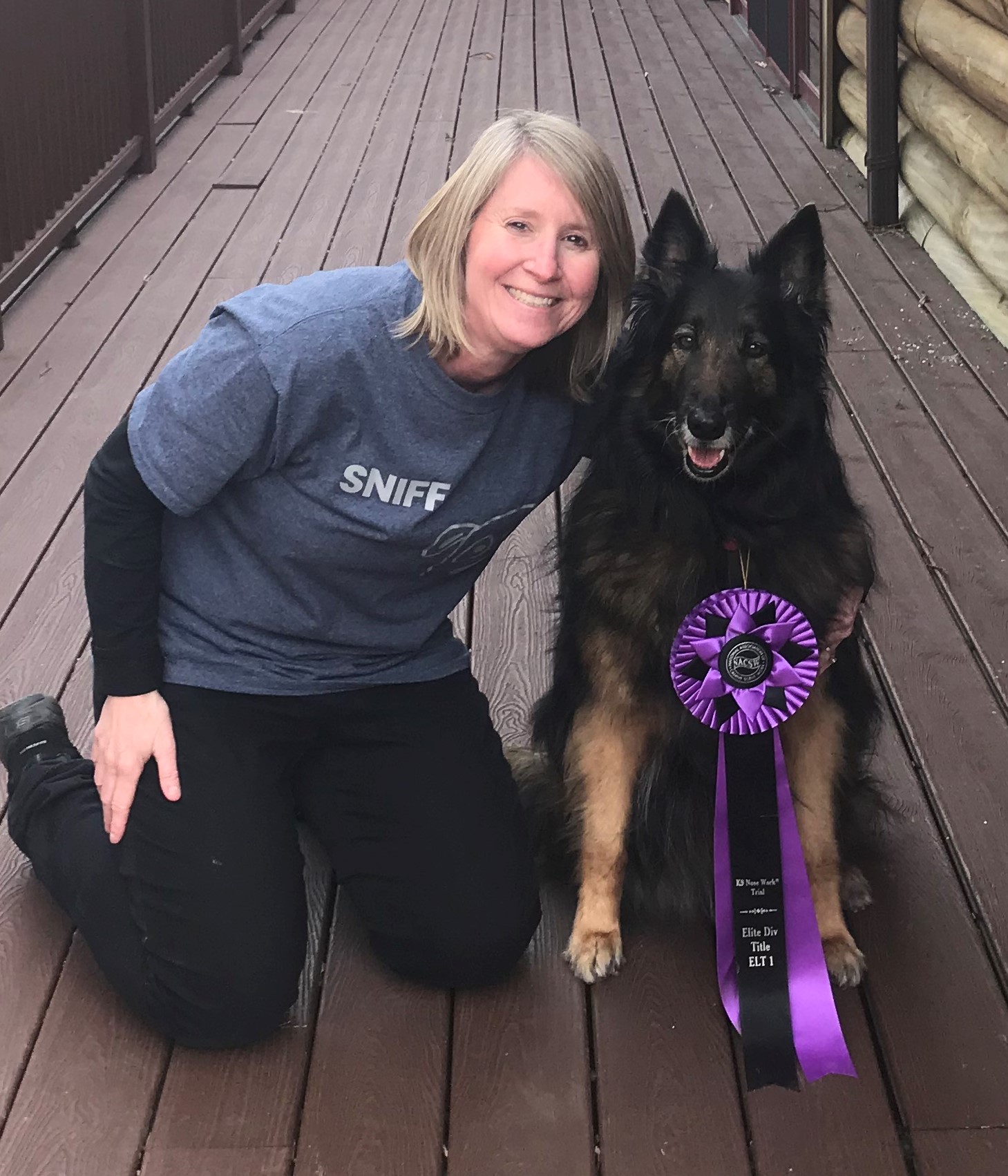
Julie Symons
Faculty
Julie Symons (she/her) has been involved in dog sports for over 30 years. Starting with her mix, Dreyfus, in flyball, she went on to train and compete in conformation, agility, obedience, herding and tracking with her first Belgian tervuren, Rival. Rival was the first CH OTCH MACH Belgian...
Registration
Gold
$260
Available seats: 12
- Access to all lectures and homework forums discussion
- Read all posted questions and answers
- Watch all posted videos
- Post general questions to discussion forum
- Submit written assignments
- Post dog specific questions
- Post videos (unlimited)
- Receive instructor feedback
Silver
$130
Available seats: 25
- Access to all lectures and homework forums discussion
- Read all posted questions and answers
- Watch all posted videos
- Post general questions to discussion forum
- Post dog specific questions (video only)
- Post videos (up to 2)
- Receive instructor feedback
Bronze
$65
Available seats: Unlimited
- Access to all lectures and homework forums discussion
- Read all posted questions and answers
- Watch all posted videos